Article Navigation
Key Takeaways
- Prioritize strategically: Address critical safety and structural issues first, followed by deferred maintenance, then energy efficiency improvements, and finally aesthetic enhancements
- Exterior projects deliver strong ROI: Garage door replacement (193%), entry door replacement (188%), and siding installation (80-88%) typically recoup the highest percentage of costs at resale
- Kitchen and bathroom remodels vary widely: Minor updates recoup 70-80% of costs, while major luxury renovations may only return 50-60%—matching neighborhood standards matters more than over-improving
- Energy efficiency pays ongoing dividends: High-efficiency HVAC systems can save $600-$1,200 annually, insulation improvements reduce consumption by 15-30%, and proper air sealing often provides greater savings than insulation alone
- Quality materials matter long-term: Premium paints, fixtures, and building materials cost more initially but typically last longer and perform better, often proving more economical over time than budget alternatives requiring frequent replacement
- Contractor selection protects your investment: Verify licensing and insurance, get multiple detailed quotes, use written contracts with clear payment schedules, and never pay in full until completely satisfied with all work
- Phasing spreads costs effectively: Multi-year improvement plans allow you to address projects systematically while managing cash flow better than attempting everything simultaneously
📢 Affiliate Disclosure
This article contains affiliate links. When you click on product links and make a purchase, we may earn a commission at no additional cost to you. We participate in the Amazon Associates program and other affiliate partnerships. We only recommend products and tools we believe will provide genuine value to readers. This compensation helps support our educational content. Thank you for your support!
Complete Home Improvements: Your Comprehensive Guide to Interior and Exterior Upgrades
Home improvement projects represent one of the most significant investments homeowners make, with the potential to enhance comfort, increase property value, and reduce long-term operating costs. The home improvement industry generates over $400 billion annually in the United States, reflecting the massive scale of renovation activity across residential properties. Whether you’re planning a single room refresh or a whole-house transformation, understanding the full scope of available improvements helps you prioritize projects that align with your goals and budget.
The home improvement landscape has evolved considerably in recent years, with new materials, technologies, and installation methods changing what’s possible for residential upgrades. From energy-efficient HVAC systems achieving 95%+ efficiency ratings to smart home integration providing unprecedented control over home systems, modern improvements offer functionality that previous generations couldn’t access. According to recent data from the National Association of Realtors, 62% of homeowners plan to undertake renovation projects within the next 12 months, with bathroom and kitchen improvements leading the list of planned projects.
This comprehensive guide explores both traditional and contemporary approaches to improving your home’s interior and exterior spaces, providing the detailed information you need to make informed decisions about your investment.
Planning Your Home Improvement Strategy
Successful home improvements begin with thorough planning rather than impulsive decisions. Homeowners who invest time in research and preparation typically achieve better outcomes and avoid costly mistakes that result from inadequate planning. A well-developed strategy accounts for immediate needs, long-term goals, budget constraints, and realistic timelines.
Start by assessing your home’s current condition through a systematic evaluation of each major system and space. Walk through your home with a quality inspection notebook, documenting issues like water stains, drafts, outdated fixtures, or areas where functionality doesn’t meet your needs. Pay particular attention to safety concerns like outdated electrical panels, aging HVAC systems, or roof damage that could lead to water intrusion. This assessment creates a comprehensive list of potential projects ranked by urgency and importance.
Budget considerations should account for both immediate costs and long-term value. Some improvements offer immediate return on investment through reduced utility bills, while others primarily enhance livability or resale value. According to research from the National Association of Realtors, certain improvements consistently deliver strong returns, with exterior projects typically outperforming interior discretionary remodels. Minor kitchen remodels recoup approximately 72% of costs at resale in most markets, while garage door replacement can return over 190% according to recent Cost vs. Value data.
Timeline planning requires realistic expectations about project duration and seasonal considerations. Simple cosmetic updates might complete in days, while major renovations involving structural changes, permits, and inspections can extend across months. Factor in lead times for custom materials, contractor scheduling, and potential weather delays for exterior work. Many homeowners find success by developing a multi-year improvement plan that sequences projects logically and spreads costs over time.
💡 Pro Tip: Prioritization Framework
Address projects in this order: (1) Critical safety and structural issues, (2) Deferred maintenance preventing further damage, (3) Energy efficiency improvements with measurable ROI, (4) Functional improvements affecting daily use, (5) Aesthetic enhancements and value-added projects. This framework protects your investment while systematically improving your home.
Interior Home Improvements
Interior improvements directly impact your daily living experience and typically deliver the most noticeable transformation in how your home feels and functions. These projects range from quick cosmetic updates requiring minimal investment to comprehensive renovations that reconfigure space and update major systems.
Kitchen Remodeling and Updates
Kitchen improvements range from minor updates to complete transformations, with costs and complexity varying accordingly. The kitchen serves as the home’s functional heart, making it a priority area for many homeowners seeking to improve their living space. Kitchen projects consistently rank among the top improvements for both lifestyle enhancement and resale value impact.
Understanding Kitchen Remodeling Costs
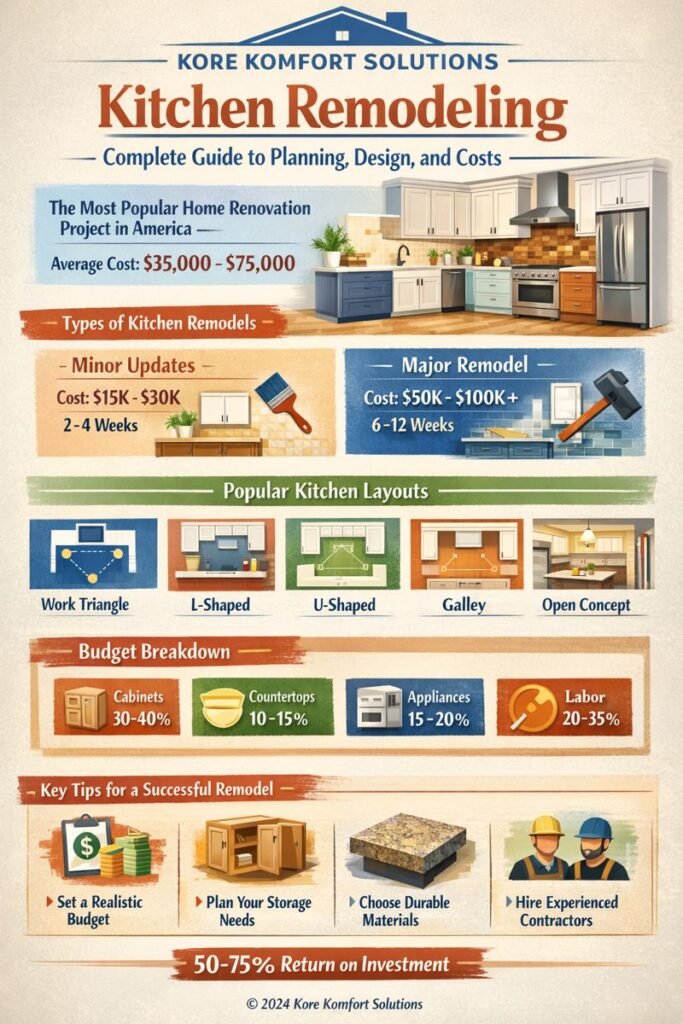
Kitchen renovation costs vary dramatically based on scope and materials. Minor remodels focusing on cosmetic updates like cabinet refacing, new countertops, and updated backsplashes typically range from $15,000-$30,000. Mid-range remodels including new cabinets, appliances, and flooring run $30,000-$60,000. Major upscale kitchen remodels with custom cabinetry, premium appliances, and high-end finishes can exceed $100,000. Labor typically accounts for 20-35% of total costs, with materials and appliances comprising the remainder.
| Project Scope | Typical Cost Range | Average ROI at Resale | Timeline |
|---|---|---|---|
| Minor Remodel (cosmetic updates) | $15,000-$30,000 | 70-80% | 2-4 weeks |
| Mid-Range Remodel | $30,000-$60,000 | 60-70% | 6-10 weeks |
| Upscale Major Remodel | $75,000-$150,000+ | 50-60% | 3-6 months |
Cabinet replacement or refacing represents the most significant visual change in most kitchen remodels. New cabinetry allows you to reconfigure layout, improve storage efficiency, and update the overall aesthetic. Quality cabinet construction features dovetail joints, soft-close hardware, and durable finishes that withstand daily use. Cabinet refacing offers a more budget-friendly option when existing cabinet boxes remain structurally sound, involving new door fronts, drawer faces, and exterior finishing while preserving the existing framework. Refacing typically costs 40-50% less than full cabinet replacement.
Countertop selection affects both functionality and aesthetics. Granite, quartz, marble, butcher block, and laminate each offer distinct characteristics regarding durability, maintenance requirements, and cost. Quartz has gained popularity for its combination of natural stone appearance with manufactured durability and minimal maintenance needs, typically costing $50-$100 per square foot installed. Granite remains a classic choice at $40-$100 per square foot, while marble commands premium prices of $50-$150 per square foot but requires more maintenance. The National Kitchen and Bath Association provides detailed guidance on material selection based on usage patterns and preferences.
Appliance upgrades can dramatically improve kitchen functionality and energy efficiency. Modern appliances incorporate features like convection cooking, smart technology integration, and significantly improved energy efficiency compared to older models. Energy Star certified appliances use 10-50% less energy than standard models, delivering ongoing savings that offset initial investment costs. We recommend considering complete appliance packages including refrigerator, range, dishwasher, and microwave, which typically range from $3,000 for basic models to $15,000+ for professional-grade equipment.
Flooring choices must balance durability, comfort, and aesthetics in this high-traffic area. Luxury vinyl plank has emerged as a popular option for its water resistance, durability, and realistic wood appearance, costing $3-$7 per square foot installed. Tile remains a classic choice for its longevity and water resistance at $5-$15 per square foot, while hardwood appeals to those prioritizing aesthetics despite higher maintenance requirements and costs of $8-$15 per square foot installed.
Lighting improvements transform kitchen functionality through layered lighting design. Ambient lighting provides overall illumination, task lighting focuses on work areas like counters and sinks, and accent lighting highlights architectural features or display areas. Under-cabinet LED strips have become standard in contemporary kitchens for their energy efficiency and excellent task lighting capabilities, typically costing $150-$400 per installation.
“The most common mistake homeowners make with kitchen remodels is underestimating the importance of the work triangle and traffic flow. No matter how beautiful your finishes are, if the layout doesn’t function efficiently, you’ll regret the investment. Always prioritize function over form, then make it beautiful.”
— Sarah Martinez, NKBA Certified Kitchen Designer, 15+ Years Experience
2026 Remodeling Cost Guide
Don’t get ripped off. See real pricing for bathrooms, kitchens, and HVAC.
Updated for 2026 Market Rates
Bathroom Renovations
Bathroom improvements enhance both functionality and property value, with full renovations consistently ranking among the top projects for return on investment. These rooms endure constant exposure to moisture, making material selection and proper installation critical for long-term performance. Bathroom renovations also offer opportunities to improve accessibility, incorporate water-saving fixtures, and create spa-like environments that enhance daily routines.
Bathroom Renovation Cost Breakdown
Bathroom remodeling costs depend heavily on room size and scope of work. Powder room updates typically range from $5,000-$15,000, while full bathroom remodels cost $10,000-$25,000. Master bathroom renovations with luxury features can reach $30,000-$60,000 or more. Key cost drivers include plumbing relocation, tile work, custom cabinetry, and fixture quality.
| Bathroom Type | Cost Range | Key Components | Timeline |
|---|---|---|---|
| Powder Room Update | $5,000-$15,000 | Vanity, toilet, flooring, lighting | 1-2 weeks |
| Full Bathroom Remodel | $10,000-$25,000 | Tub/shower, vanity, toilet, tile, fixtures | 3-4 weeks |
| Master Bath Renovation | $30,000-$60,000+ | Custom shower, soaking tub, dual vanities, luxury finishes | 6-10 weeks |
Shower and tub replacement options range from simple liner systems to complete custom installations. Walk-in showers with curbless entries accommodate aging-in-place needs while providing contemporary aesthetics, typically costing $3,000-$8,000 depending on size and finishes. Tub-to-shower conversions free up space in smaller bathrooms and cost $2,500-$6,000, while freestanding tubs create spa-like focal points in master suites at $1,000-$5,000 for the tub itself plus installation.
Vanity replacement immediately updates bathroom appearance while improving storage capacity. Modern vanities feature soft-close drawers, integrated electrical outlets, and options for single or double sink configurations. Quality vanities range from $500-$2,000 for pre-fabricated units to $3,000-$8,000 for custom installations. We recommend wall-mounted vanities that create a floating appearance, making small bathrooms feel more spacious while simplifying floor cleaning.
Tile selection affects both aesthetics and maintenance requirements. Large-format tiles minimize grout lines, reducing cleaning time and improving water resistance. Porcelain tile outperforms ceramic in durability and moisture resistance, making it ideal for floors and shower enclosures at $5-$15 per square foot. Natural stone tiles like marble or travertine offer distinctive beauty at $8-$25 per square foot but require regular sealing. Proper waterproofing beneath tile installations prevents long-term moisture damage that can compromise structural integrity.
Fixture upgrades including faucets, showerheads, and toilets combine improved aesthetics with modern functionality. Low-flow fixtures significantly reduce water consumption without sacrificing performance. According to the EPA’s WaterSense program, replacing old toilets with WaterSense certified models can save a family of four more than $110 per year in water costs and $2,200 over the fixture’s lifetime. We recommend considering quality bathroom faucets ranging from $100-$500, while efficient toilets cost $150-$800 depending on features and efficiency ratings.
💡 Pro Tip: Ventilation is Critical
Proper bathroom ventilation prevents mold, mildew, and moisture damage that can destroy renovations within years. We recommend installing exhaust fans rated for your bathroom size (measured in CFM – cubic feet per minute), vented to the exterior, and operated for 20 minutes after each shower. This single element protects your entire investment and ensures long-term performance.
Flooring Installation and Replacement
Flooring creates the foundation for interior design while enduring constant wear from foot traffic, furniture movement, and environmental factors. Selecting appropriate flooring for each space requires understanding material characteristics, installation requirements, maintenance needs, and lifecycle costs. Modern flooring options offer improved durability and aesthetics compared to products from even a decade ago.
Flooring Cost Comparison
| Flooring Type | Cost per Sq Ft (Installed) | Lifespan | Best Applications |
|---|---|---|---|
| Luxury Vinyl Plank (LVP) | $4-$8 | 15-25 years | All rooms, especially moisture-prone areas |
| Engineered Hardwood | $8-$15 | 25-40 years | Living areas, bedrooms (not basements) |
| Solid Hardwood | $10-$18 | 50-100+ years | Main living areas, above-grade only |
| Porcelain Tile | $8-$20 | 50+ years | Bathrooms, kitchens, entryways |
| Quality Carpet | $3-$8 | 10-15 years | Bedrooms, living rooms |
| Natural Stone | $10-$30 | 50+ years | High-end applications, entryways |
Hardwood flooring remains highly desirable for its natural beauty, durability, and positive impact on resale value. Solid hardwood can be sanded and refinished multiple times over its lifespan, potentially lasting for generations with proper care. Red oak and white oak dominate the market for their durability and grain patterns, while exotic species like Brazilian cherry offer distinctive appearances at premium prices. We recommend engineered hardwood for improved stability in environments with moisture or temperature fluctuations, making it suitable for below-grade installations where solid hardwood isn’t appropriate.
Luxury vinyl plank has transformed the vinyl flooring category through realistic wood and stone appearance combined with superior durability and water resistance. The click-lock installation system allows for floating floor installation without adhesives, making it accessible for DIY projects and reducing installation costs. Premium LVP products feature wear layers thick enough to withstand commercial traffic and incorporate enhanced underlayment for sound dampening. This material performs well in high-moisture areas like bathrooms, kitchens, and basements where hardwood would be problematic.
Tile flooring provides unmatched durability and water resistance for areas exposed to moisture. Porcelain tile’s density makes it extremely resistant to wear and moisture penetration, suitable for both floors and walls. Large-format tiles (12×24 inches or larger) create contemporary looks with minimal grout lines, while smaller mosaic tiles offer design flexibility and slip resistance in wet areas. Installation requires proper substrate preparation and skilled labor to ensure long-term performance, but the result can last for decades with minimal maintenance beyond periodic grout sealing.
Carpet installation creates warmth and comfort in bedrooms and living areas. Modern carpets feature improved stain resistance through treatments like Scotchgard and enhanced durability through tighter weaves and resilient fiber construction. Nylon remains the most durable carpet fiber, while polyester offers budget-friendly options with good stain resistance. We recommend considering carpet tiles that offer interesting design possibilities and practical advantages, as individual tiles can be replaced if damaged without replacing entire rooms, making them particularly suitable for homes with pets or children.
Interior Painting and Wall Treatments
Paint represents one of the most cost-effective improvements for transforming interior spaces, typically costing $2-$6 per square foot for professional application or $0.50-$1.50 per square foot for DIY projects excluding labor. Professional-quality paint application requires proper surface preparation, appropriate product selection, and skilled technique that prevents common issues like lap marks, uneven coverage, or premature failure.
Paint quality significantly affects both appearance and longevity. Premium paints contain higher pigment concentrations and better binders, resulting in superior coverage, durability, and color retention. While budget paints cost less initially at $20-$30 per gallon, they often require additional coats and more frequent repainting, ultimately increasing total cost over time. We recommend premium paints at $50-$80 per gallon that typically provide better coverage, longer warranty periods, and more resistant finishes that withstand cleaning and wear.
Color selection affects room perception and mood through both psychological impact and light reflection properties. Lighter colors make spaces feel larger and brighter by reflecting more light, while darker colors create intimate, cozy atmospheres but can make rooms feel smaller. Neutral palettes provide versatility and broader appeal, particularly important when considering future resale value. Accent walls add visual interest without overwhelming spaces with bold colors, serving as focal points that define spaces within open floor plans.
Wall treatments beyond standard paint include wallpaper, wainscoting, board and batten, shiplap, and textured finishes. Removable wallpaper has revitalized this category by eliminating the permanence concerns associated with traditional wallpaper, offering endless design possibilities at $1-$5 per square foot. We recommend peel-and-stick wallpaper for easy installation and removal. Wainscoting and board and batten add architectural interest and traditional elegance at $7-$15 per square foot installed. These treatments protect walls in high-traffic areas while adding character to otherwise plain walls.
Lighting Upgrades and Installation
Lighting improvements transform how spaces look and function while affecting energy consumption and ambiance. Modern lighting design emphasizes layered lighting that combines ambient, task, and accent sources to create flexible environments suitable for different activities and times of day. According to the U.S. Department of Energy, lighting accounts for approximately 15% of home electricity use, making efficiency improvements particularly valuable.
LED technology has revolutionized residential lighting through dramatic improvements in energy efficiency, color quality, and lifespan. LED bulbs use 75% less energy than incandescent bulbs and last up to 25 times longer, with quality LED bulbs providing 25,000-50,000 hours of illumination. Initial higher costs are recovered through reduced energy bills and eliminated replacement costs within 1-2 years for frequently used fixtures. Color temperature selection affects mood and functionality, with 2700K-3000K providing warm light suitable for living areas and 3500K-4100K offering neutral white light better for task areas.
Recessed lighting provides clean, modern ambient illumination without visual clutter from fixtures. Strategic placement creates even light distribution while avoiding shadows in work areas. Spacing typically follows a guideline of placing fixtures approximately half the ceiling height apart for even coverage. We recommend dimmable LED recessed lights that offer flexibility to adjust lighting levels based on time of day and activities, with quality fixtures costing $50-$150 each installed.
Pendant lighting serves both functional and decorative purposes, particularly over kitchen islands, dining tables, and in entryways. These fixtures create visual focal points while providing concentrated task lighting where needed. Pendant heights should allow clearance for activities below while placing light sources at appropriate levels. We recommend coordinated pendant fixtures ranging from $100-$500 each for quality residential products, with installation costs adding $100-$300 per fixture depending on complexity.
Smart lighting systems enable control through smartphones, voice commands, and automated schedules. These systems can significantly reduce energy waste by ensuring lights aren’t left on unnecessarily while providing enhanced security through scheduled or random patterns when away from home. Integration with home automation platforms allows coordination with other systems. We recommend exploring smart bulbs starting at $10-$20 per bulb, while complete smart lighting systems with hubs and switches cost $200-$1,000 depending on home size and features desired.
Exterior Home Improvements
Exterior improvements protect your home from weather, enhance curb appeal, and affect property value. These projects often require more planning than interior work due to weather considerations, potential permit requirements, and the need to coordinate work affecting your home’s weather barrier. Exterior improvements typically deliver strong ROI, with many projects recouping 75-95% of costs at resale according to annual Cost vs. Value surveys.
Roofing Replacement and Repair
Roofing represents one of the most critical exterior systems, protecting your entire home from weather damage. Most asphalt shingle roofs last 20-30 years depending on climate, installation quality, and maintenance. Complete roof replacement represents a major investment, typically costing $5,000-$15,000 for an average-sized home with standard materials, or $15,000-$40,000+ for premium materials like metal or tile.
Roofing Material Comparison
| Roofing Material | Cost per Sq Ft (Installed) | Lifespan | Key Benefits |
|---|---|---|---|
| 3-Tab Asphalt Shingles | $3.50-$5.50 | 20-25 years | Economical, widely available |
| Architectural Shingles | $4.50-$7.00 | 25-30 years | Enhanced appearance, better warranties |
| Metal Roofing | $7.00-$14.00 | 40-70 years | Longevity, energy efficiency, low maintenance |
| Clay/Concrete Tile | $10.00-$18.00 | 50-100 years | Durability, fire resistance, distinctive appearance |
| Slate | $15.00-$30.00 | 75-200 years | Premium appearance, exceptional longevity |
Asphalt shingles dominate residential roofing for their balance of cost, performance, and aesthetic options. Architectural shingles offer improved appearance and durability compared to basic three-tab shingles, with warranties extending to 30-50 years for premium products. Color selection affects both aesthetics and energy efficiency, with lighter colors reflecting more solar heat and potentially reducing cooling costs by 7-15% in warm climates according to Department of Energy studies.
Metal roofing has gained residential popularity for its longevity, energy efficiency, and low maintenance requirements. Metal roofs can last 50+ years and reflect solar heat, reducing cooling costs by 10-25% in warm climates. While initial costs exceed asphalt shingles by 2-3 times, the extended lifespan often makes metal roofing more economical over the long term. Standing seam metal roofs offer superior weather resistance and modern aesthetics, while metal shingles mimic traditional roof appearances.
Roof inspection should occur annually to identify minor issues before they escalate into major problems. Missing or damaged shingles, deteriorated flashing around chimneys and vents, sagging areas, and excessive granule loss indicate problems requiring professional attention. Addressing small issues promptly prevents water intrusion that can cause extensive structural damage, interior damage, and mold growth. We recommend using a quality set of binoculars for safe ground-level inspections, with professional roof inspections typically costing $200-$400 and providing detailed assessments of remaining lifespan and needed repairs.
“The most expensive roof replacement is the one done too late. Once water penetrates into the roof deck and structure, your costs multiply exponentially. Annual inspections and prompt minor repairs are the difference between a $500 fix and a $25,000 problem that includes structural repairs and mold remediation.”
— Michael Thompson, Licensed Roofing Contractor, 30+ Years Experience
Siding Installation and Replacement
Siding protects your home’s structure while defining its exterior appearance. Modern siding materials offer improved durability, lower maintenance, and better energy efficiency than older products. Complete siding replacement typically costs $8,000-$24,000 for an average-sized home depending on material choice and home configuration. Siding serves as your home’s primary defense against weather while dramatically affecting curb appeal and energy performance.
Siding Material Options and Costs
| Siding Type | Cost per Sq Ft (Installed) | Lifespan | Maintenance Level |
|---|---|---|---|
| Vinyl Siding | $4-$8 | 20-40 years | Very Low |
| Fiber Cement | $8-$12 | 30-50 years | Moderate (periodic painting) |
| Engineered Wood | $6-$10 | 25-30 years | Moderate |
| Natural Wood | $8-$16 | 20-40 years | High (regular staining/painting) |
| Brick Veneer | $10-$18 | 100+ years | Very Low |
| Stone Veneer | $12-$25 | 50-100 years | Very Low |
Vinyl siding provides an economical, low-maintenance exterior cladding option. Quality vinyl siding resists fading through UV-resistant colorants, doesn’t require painting, and withstands weather exposure for 20-40 years. Insulated vinyl siding incorporates foam backing that improves energy efficiency by 20-30% and impact resistance. Premium vinyl products feature realistic wood grain textures and enhanced thickness that improve appearance and durability. Vinyl siding comes in dozens of colors and styles, though darker colors may fade more noticeably over time in sunny climates.
Fiber cement siding combines cement, sand, and cellulose fibers to create a durable product that resists fire, insects, and rot. This material can replicate the appearance of wood siding while requiring significantly less maintenance than natural wood. Fiber cement requires repainting every 10-15 years but offers superior longevity compared to wood, typically lasting 30-50 years. The material’s density provides excellent impact resistance and sound dampening. Installation requires specialized cutting tools due to the material’s density and weight.
Wood siding appeals to homeowners seeking natural aesthetics and traditional craftsmanship. Cedar and redwood contain natural oils that resist decay, though all wood siding requires regular maintenance including painting or staining every 3-5 years. Proper installation with adequate drainage and ventilation extends wood siding lifespan significantly, with well-maintained wood siding lasting 40+ years. Wood siding costs more than vinyl but less than premium fiber cement or masonry options, while offering unmatched natural beauty and traditional appeal.
Window and Door Replacement
Windows and doors significantly impact energy efficiency, security, and aesthetics. Older single-pane windows lose substantial heat in winter and gain unwanted heat in summer, directly affecting comfort and utility costs. Window and door replacement typically costs $7,000-$20,000 for an average home, depending on the number of openings, product quality, and installation complexity.
Window Replacement Costs and Benefits
| Window Type | Cost per Window (Installed) | Energy Savings Potential | Best Applications |
|---|---|---|---|
| Double-Hung Vinyl | $400-$800 | Up to 24% on heating/cooling | Standard residential replacement |
| Casement Vinyl | $500-$1,000 | Up to 28% on heating/cooling | Areas requiring maximum ventilation |
| Double-Hung Wood | $600-$1,200 | Up to 27% on heating/cooling | Historic homes, premium aesthetics |
| Fiberglass | $700-$1,400 | Up to 30% on heating/cooling | Extreme climates, premium performance |
Modern windows feature double or triple-pane glass with low-E coatings and argon or krypton gas fills between panes. These technologies reduce heat transfer while allowing natural light transmission. Low-E coatings reflect infrared light while allowing visible light to pass through, reducing solar heat gain in summer and heat loss in winter by up to 30-50%. The Energy Star program certifies windows that meet efficiency standards for different climate zones, helping homeowners select appropriate products for their region’s conditions.
Window installation quality affects performance as much as the window itself. Proper flashing, sealing, and insulation around the window frame prevents air and water infiltration that can negate the efficiency benefits of premium windows. Professional installation typically includes warranty coverage not available with DIY installation, protecting against installation defects and ensuring proper performance. Window replacement payback periods typically run 8-15 years through reduced energy costs, with additional benefits including improved comfort, noise reduction, and enhanced curb appeal.
Entry door replacement enhances security, energy efficiency, and curb appeal. Steel doors provide excellent security and energy efficiency at moderate cost, typically $500-$1,500 installed for quality products. Fiberglass doors offer the appearance of wood grain with superior durability and energy efficiency, costing $700-$2,500 installed. Wood doors provide natural beauty and traditional appeal but require regular maintenance to preserve appearance and performance, with costs ranging $1,000-$3,500 installed. We recommend considering steel entry doors for their combination of value and performance. Garage door replacement represents one of the highest ROI improvements, often recouping over 190% of costs at resale according to recent industry data, with quality garage doors costing $1,500-$4,000 installed.
Deck and Patio Construction
Outdoor living spaces extend usable square footage and create venues for entertaining and relaxation. Decks and patios require careful planning regarding materials, location, intended use, and integration with home architecture. These improvements typically cost $4,000-$12,000 for decks and $3,000-$10,000 for patios depending on size, materials, and features.
Pressure-treated lumber provides economical deck construction material with reasonable longevity when properly maintained. Regular sealing and staining preserve appearance and extend lifespan to 15-20 years at a material cost of $15-$25 per square foot installed. Composite decking eliminates ongoing maintenance requirements through manufactured boards that resist fading, splintering, and decay, costing $30-$45 per square foot installed. We recommend composite decking for its minimal maintenance and extended lifespan of 25-30 years, which often justifies the premium for homeowners seeking low-maintenance solutions.
Concrete patios offer durability and design flexibility through stamped patterns, exposed aggregates, and integrated color, typically costing $8-$18 per square foot. Proper site preparation and drainage design prevents settling and cracking. Concrete requires minimal maintenance and lasts 30-40 years with proper installation. Pavers create attractive patios with the advantage of individual piece replacement if damage occurs, avoiding the need to replace entire sections as with poured concrete. Paver patios cost $12-$25 per square foot installed depending on material choice and pattern complexity.
Deck design should account for traffic flow, furniture placement, and transitions between indoor and outdoor spaces. Multi-level decks create distinct zones for different activities like dining, lounging, and cooking. We recommend incorporating integrated lighting that extends usability into evening hours while enhancing safety on stairs and along railings. Built-in seating, planters, and storage maximize functionality while minimizing the need for separate furniture that can clutter spaces.
💡 Pro Tip: Outdoor Living ROI
While outdoor improvements rarely recoup full costs at resale, they deliver significant lifestyle value and can help homes sell faster by creating emotional connections with buyers. Focus on appropriately sized improvements that match neighborhood norms rather than over-improving beyond area standards. A $15,000 deck in a neighborhood where most homes have $8,000-$10,000 decks likely won’t return the premium investment.
Landscaping and Hardscaping
Landscaping improvements affect curb appeal, property value, and outdoor enjoyment. Thoughtful landscape design balances aesthetics, functionality, and maintenance requirements while considering long-term growth patterns and seasonal changes. Professional landscaping projects typically cost $3,000-$15,000 depending on scope, while ongoing maintenance runs $100-$300 monthly for professional services or can be handled by homeowners willing to invest time.
Plant selection should account for your climate zone, sun exposure, soil conditions, and available maintenance time. Native plants typically require less water and maintenance while supporting local ecosystems and providing habitat for beneficial insects and pollinators. Grouping plants with similar water and sun requirements creates efficient irrigation zones and simplified maintenance. Proper plant spacing accounts for mature sizes, preventing crowding that can lead to disease and poor growth.
Hardscaping elements including retaining walls, walkways, and garden beds provide structure and definition to landscape design. These permanent features require minimal ongoing maintenance while creating visual interest year-round. Stone or brick walkways cost $15-$30 per square foot installed, while retaining walls range from $20-$50 per square foot depending on height and materials. Proper drainage consideration prevents water accumulation that can damage structures and create soggy areas unsuitable for planting.
Irrigation systems range from simple soaker hoses to sophisticated smart controllers that adjust watering based on weather conditions, soil moisture, and plant needs. Drip irrigation delivers water directly to plant roots with minimal waste, reducing water consumption by 30-50% compared to traditional spray systems while costing $1.50-$3.00 per square foot installed. We recommend exploring drip irrigation kits for efficient watering. Traditional sprinkler systems cost $2,500-$5,000 for average-sized properties and cover larger lawn areas efficiently. We recommend smart controllers that can reduce outdoor water use by up to 50% compared to manual watering schedules through weather-based adjustments and precise zone management.
Home Systems Improvements
Mechanical, electrical, and plumbing systems form your home’s operational infrastructure. These systems typically remain hidden but profoundly affect comfort, efficiency, and livability. Improvements to home systems often deliver the greatest energy savings and operational cost reductions, though they may not provide the same emotional impact or curb appeal as visible improvements.
HVAC System Upgrades
Heating and cooling systems represent major energy consumers in most homes, making efficiency improvements particularly valuable. HVAC systems typically account for 40-50% of home energy consumption. Modern HVAC technology offers significantly better performance than systems installed even 10-15 years ago, with efficiency improvements of 30-60% common when replacing older equipment.
HVAC System Costs and Efficiency Ratings
| System Type | Installed Cost | Efficiency Rating | Annual Operating Cost (Avg Home) |
|---|---|---|---|
| Standard Efficiency AC + Furnace | $5,000-$8,000 | 14-16 SEER, 80-85% AFUE | $1,800-$2,400 |
| High Efficiency AC + Furnace | $7,000-$12,000 | 18-20 SEER, 95-98% AFUE | $1,200-$1,600 |
| Heat Pump System | $6,500-$11,000 | 16-20 SEER | $1,000-$1,500 |
| Ductless Mini-Split | $3,000-$7,000 (per zone) | 18-30 SEER | $800-$1,200 (per zone) |
Central air conditioning replacement with high-efficiency units reduces cooling costs by 20-40% compared to older systems. SEER ratings (Seasonal Energy Efficiency Ratio) indicate efficiency, with higher numbers representing better performance. Current minimum standards require 14 SEER for new installations, while premium units reach 20+ SEER for maximum efficiency. Each SEER point improvement reduces cooling costs by approximately 5-7%, making high-efficiency units increasingly attractive as energy costs rise.
Furnace replacement with high-efficiency models similarly reduces heating costs. Annual Fuel Utilization Efficiency (AFUE) ratings show what percentage of fuel converts to heat, with modern high-efficiency furnaces achieving 95-98% AFUE compared to 60-70% for older units. This dramatic efficiency improvement can cut heating costs nearly in half, providing payback periods of 5-10 years depending on climate and usage. Modulating furnaces that adjust output based on demand provide superior comfort and efficiency compared to single-stage units.
Heat pumps offer combined heating and cooling using electricity to move heat rather than generate it through combustion. In moderate climates, heat pumps provide extremely efficient climate control with heating efficiency 2-3 times better than electric resistance heating. Modern cold-climate heat pumps can operate effectively even in below-freezing temperatures down to -15°F or lower, expanding their viable geographic range significantly compared to older heat pump technology.
Ductless mini-split systems provide targeted climate control without ductwork. These systems excel for room additions, converted garages, or homes without existing ductwork. Individual zone control allows different temperatures in different rooms, eliminating the waste of heating or cooling unused spaces. Installation costs less than extending central ductwork, while efficiency ratings often exceed central systems due to elimination of duct losses that can waste 20-30% of conditioned air. We recommend exploring ductless mini-split systems for their combination of efficiency and flexibility.
Electrical System Upgrades
Electrical improvements enhance safety, accommodate modern power demands, and enable new technologies. Older homes often have electrical systems inadequate for contemporary usage patterns including electric vehicle charging, home offices with multiple computers and monitors, and entertainment systems. Electrical upgrades typically cost $1,500-$5,000 for panel upgrades and $200-$500 per circuit for new circuit additions.
Electrical panel upgrades increase available capacity to support modern appliances, EV charging, and home additions. Many older homes have 100-amp service insufficient for current needs, while modern homes typically require 200-amp service. Panel replacement costs $1,500-$3,500 depending on amperage increase and complexity. Panel upgrades also update outdated circuit breaker technology to current safety standards including AFCI (Arc Fault Circuit Interrupter) and GFCI (Ground Fault Circuit Interrupter) protection that prevents electrical fires and shocks.
Whole-house surge protection prevents damage to sensitive electronics from voltage spikes caused by lightning strikes, power grid switching, or large appliance cycles. We recommend whole-house surge protectors that install at the electrical panel to intercept surges before they reach connected equipment, costing $300-$700 installed. Given the value of computers, smart TVs, home automation systems, and kitchen appliances with electronic controls, surge protection provides inexpensive insurance against expensive damage.
Additional circuit installation accommodates new appliances and reduces overloaded circuits that trip breakers frequently. Dedicated circuits for major appliances prevent breaker trips and ensure adequate power delivery for optimal performance. Modern code requirements mandate GFCI protection in bathrooms, kitchens, laundry rooms, and outdoor outlets to prevent electrical shock in wet environments. AFCI protection is required in bedrooms and many other living spaces to prevent fires caused by damaged wiring or arcing connections.
Plumbing Improvements
Plumbing upgrades improve water quality, prevent damage from leaks, and enhance functionality. Proactive improvements often cost far less than emergency repairs following plumbing failures that can cause extensive water damage. Plumbing projects typically cost $500-$3,000 for fixture upgrades, $2,000-$5,000 for water heater replacement, and $3,000-$10,000 for repiping sections of a home.
Pipe replacement eliminates problems associated with aging plumbing materials. Galvanized steel pipes common in older homes corrode internally, reducing water pressure and quality while increasing leak risk. Replacing galvanized pipes with copper or PEX eliminates these issues while reducing leak risk substantially. PEX piping has gained popularity for its flexibility, freeze resistance, and lower installation cost compared to copper. PEX costs $0.50-$2.00 per linear foot for materials compared to $2.00-$4.00 for copper, with installation labor similarly reduced due to easier routing and fewer connections required.
Water heater replacement with efficient models reduces energy consumption for hot water production, which typically accounts for 15-20% of home energy use. Tankless water heaters provide endless hot water and eliminate standby heat loss from stored hot water, reducing energy consumption by 24-34% for homes using 41 gallons or less of hot water daily. We recommend exploring tankless water heaters costing $1,500-$3,500 installed compared to $800-$1,500 for traditional tank water heaters. Heat pump water heaters extract heat from surrounding air to warm water, using 60% less energy than conventional electric water heaters at installed costs of $1,200-$2,500.
Water treatment systems address quality issues including hardness, iron, sulfur odor, and contaminants. Whole-house systems treat all water entering your home, protecting appliances and fixtures from scale buildup while improving water quality for all uses. We recommend water softeners costing $800-$2,500 installed that reduce scale buildup damaging water heaters, dishwashers, and washing machines while improving soap effectiveness. Point-of-use systems treat water at specific fixtures for drinking water quality, with under-sink filtration systems costing $200-$1,000 installed depending on technology and capacity.
Insulation and Air Sealing
Thermal envelope improvements reduce energy waste while enhancing comfort throughout the year. Many homes have inadequate or damaged insulation that allows substantial heat transfer between conditioned and unconditioned spaces. Insulation improvements typically cost $1.50-$3.50 per square foot for attic insulation and $2.50-$5.00 per square foot for wall insulation, with payback periods of 2-7 years through reduced energy costs.
Attic insulation upgrades provide excellent return on investment through reduced heating and cooling costs. Most attics should have R-38 to R-60 insulation depending on climate zone, with R-value indicating thermal resistance where higher numbers provide better performance. Blown fiberglass or cellulose insulation fills irregularly shaped spaces effectively at $1.20-$2.00 per square foot installed, while batt insulation works well for standard joist spacing at $0.75-$1.50 per square foot. Adequate attic insulation can reduce heating and cooling costs by 15-30% while dramatically improving comfort in rooms below attic spaces.
Wall insulation improvements require more invasive work but can dramatically improve comfort in older homes built without adequate insulation. Blown-in insulation can fill wall cavities through small holes that are patched and painted afterward, costing $2.50-$4.00 per square foot. Exterior foam board installation during siding replacement provides a prime opportunity to add continuous insulation that eliminates thermal bridging through framing members, improving effective R-value by 20-40% compared to cavity insulation alone.
Air sealing prevents conditioned air from escaping through gaps and cracks in the building envelope. Common leak locations include attic hatches, recessed lighting penetrations, plumbing and electrical penetrations, and gaps around windows and doors. Professional energy audits using blower door testing identify leak locations precisely, costing $300-$600 but providing clear roadmaps for improvement. We recommend weatherstripping kits and spray foam sealant for sealing air leaks, often providing greater energy savings than adding insulation alone, with costs typically under $1,000 for materials and professional sealing services.
Hiring Contractors and Managing Projects
Successfully executing home improvements often requires skilled professionals for specialized work, complex projects, or when time constraints prevent DIY approaches. Selecting qualified contractors and managing projects effectively protects your investment and ensures quality results that meet codes and perform reliably over time.
Contractor Selection Process
Finding reliable contractors requires research beyond simple internet searches or choosing the lowest bid. Start by gathering recommendations from friends, neighbors, and local building supply stores whose employees work with contractors daily. Online review platforms provide additional perspective but should be evaluated critically, looking for patterns rather than individual reviews that may not represent typical experiences.
Licensing and insurance verification protects homeowners from liability and ensures contractors meet minimum competency standards established by regulatory agencies. Request certificates of insurance showing both liability coverage and workers’ compensation. Contact the issuing insurance company directly to verify current coverage, as contractors can present outdated certificates. Check license status through state or local licensing boards, which often provide information about complaints, violations, and license restrictions.
Multiple quotes allow comparison of pricing, approach, and professionalism. Provide identical project specifications to each bidder including materials, scope, timeline expectations, and any special requirements to ensure comparable quotes. The lowest bid isn’t necessarily the best value when considering reputation, warranty coverage, and included services. Extremely low bids may indicate cut corners, missing work that will create change orders later, or contractors who won’t remain in business long enough to honor warranties.
“The cheapest bid is usually the most expensive in the long run. When I see a bid significantly lower than others, I know corners will be cut somewhere. Focus on value rather than price alone. Look at references, past work quality, communication style, and whether the contractor demonstrates deep knowledge of your project type. These factors matter far more than saving 10-15% upfront.”
— Jennifer Rodriguez, Home Renovation Consultant, 20+ Years Experience
Contract Essentials
Written contracts protect both parties by documenting expectations, timelines, and responsibilities. Verbal agreements create unnecessary risk and should be avoided regardless of how well you know the contractor or how simple the project seems. Professional contractors expect written agreements and consider them standard business practice.
Detailed scope of work descriptions prevent disputes about what’s included in the contract price. Specify materials by brand and model number where applicable. Include who provides materials, how changes are handled, what constitutes project completion, and dispute resolution procedures. Address disposal of demolition debris, daily cleanup responsibilities, work hours, and access to facilities. The more detailed the scope, the less room exists for misunderstanding.
Payment schedules should tie payments to completed work rather than calendar dates. Initial deposits should be reasonable—typically 10-25% of total cost—rather than excessive upfront payments that create risk if contractors abandon projects. Hold substantial final payment until project completion and final inspection to maintain leverage if issues arise. Never pay in full until you’re completely satisfied with all work.
Warranty information should clearly state what’s covered and for how long, distinguishing between manufacturer warranties on materials and contractor warranties on labor. Understand the process for addressing warranty issues should they arise. Quality contractors typically provide 1-2 year warranties on labor, while materials carry manufacturer warranties ranging from 1 year to lifetime depending on product category.
Project Management Best Practices
Successful project completion requires clear communication and realistic expectations throughout the work period. Establish regular check-in schedules to review progress and address questions before they become problems. Visit job sites regularly but avoid micromanaging professionals doing their work. Trust is important, but verification through periodic oversight protects your investment.
Document everything through photos, notes, and written communications. This documentation proves valuable if disputes arise about work quality, timeline, or agreed specifications. Take before, during, and after photos showing both overall project and specific details. We recommend using a dedicated project notebook to track all communications. Save all emails, texts, and other written communications related to the project. Document conversations with contractors in writing following meetings or phone calls.
Change orders should be documented in writing before additional work proceeds. Verbal agreements about changes create confusion and disputes about costs and scope. Require written change orders specifying additional costs, schedule impacts, and detailed description of extra work before authorizing changes. Keep copies of all signed change orders with your project documentation.
Permit requirements vary by location and project type. Contractors typically handle permit applications, but homeowners remain ultimately responsible for code compliance regardless of who pulls permits. Verify that required permits are obtained before work begins and that inspections occur as needed. Unpermitted work can create problems when selling your home, void insurance coverage for damage, and result in fines or requirements to undo completed work.
Return on Investment Considerations
Different improvements offer varying financial returns, though personal value considerations may outweigh purely financial analysis when improvements significantly enhance your daily living experience. Understanding typical returns helps prioritize projects when multiple improvements compete for limited budgets, while recognizing that some improvements deliver value primarily through improved comfort and enjoyment rather than increased resale value.
High-ROI Exterior Projects
Exterior improvements often deliver stronger returns through enhanced curb appeal that creates powerful first impressions for potential buyers. According to recent Cost vs. Value data analyzing 150 metropolitan markets, garage door replacement leads ROI rankings at 193% nationally, followed by entry door replacement at 188%. These projects combine relatively low costs with dramatic curb appeal improvements and functional benefits including improved security and energy efficiency.
Siding replacement delivers strong returns, with vinyl siding recouping approximately 80% of costs and fiber cement siding returning 88% on average. Window replacement in cold climates can return 85-90% of costs while also delivering energy savings that continue reducing operating costs throughout ownership. Manufactured stone veneer accents return approximately 92% of costs while creating distinctive appearances that differentiate homes from neighbors.
Interior Project Returns
Kitchen and bathroom remodels consistently rank among the top projects for resale value impact, though returns vary significantly by project scope. Minor kitchen remodels typically recoup 70-80% of costs at resale, while major upscale kitchen remodels recoup less at 50-60%. The disconnect between cost and value increases as projects move from modest updates toward luxury installations that exceed neighborhood norms.
Bathroom remodels generally recoup 60-70% of costs, with midrange bathroom additions delivering the strongest returns at 65-70%. These projects deliver significant lifestyle benefits during ownership while making homes more appealing to buyers who value updated, functional spaces. Bathroom renovations addressing deferred maintenance or improving functionality typically perform better than luxury upgrades adding features beyond market expectations.
Energy Efficiency Returns
Energy efficiency improvements provide ongoing returns through reduced utility bills rather than direct resale value premiums. While buyers appreciate efficient homes, the premium they’ll pay may not fully reflect your investment. However, lower monthly operating costs provide tangible benefits throughout ownership that can total thousands of dollars over years of reduced energy consumption.
HVAC replacement with high-efficiency equipment can reduce heating and cooling costs by $600-$1,200 annually in typical climates. Insulation improvements reduce energy consumption by 15-30% with payback periods of 2-7 years. Window replacement saves $150-$400 annually in typical climates with payback periods of 8-15 years. These ongoing savings continue benefiting homeowners throughout ownership while positioning homes favorably against less efficient competition when selling.
Regional Variations in ROI
Project returns vary significantly by region, with coastal and high-cost markets typically showing lower percentage returns due to higher baseline costs. Conversely, Midwestern markets often show stronger percentage returns on improvements. Climate affects returns as well, with window replacement delivering stronger returns in cold climates than warm regions, while energy-efficient cooling systems provide greater value in hot climates.
Market conditions impact returns substantially. In seller’s markets with limited inventory and high demand, improvements may return 80-100% or more as buyers compete for limited properties. In buyer’s markets with excess inventory, returns typically decline as buyers negotiate harder and focus on properties requiring less work. Understanding your local market conditions helps set realistic expectations about potential returns.
Personal Value Considerations
Personal enjoyment and lifestyle improvements deserve consideration beyond simple financial returns. A renovated master bathroom may not fully recoup costs at resale, but daily enjoyment over years of ownership provides real value that financial analysis doesn’t capture. Similarly, a finished basement creating usable space for family activities delivers benefits throughout ownership regardless of eventual resale value.
Balance financial considerations with how improvements enhance your actual living experience. If you plan to remain in your home for many years, prioritize improvements that address your needs and preferences rather than focusing exclusively on resale value. However, avoid highly personalized improvements that may limit buyer appeal when eventually selling. Maintaining broad appeal through relatively neutral finishes and standard features typically serves both personal enjoyment and eventual resale value.
Sample 12-Month Home Improvement Implementation Plan
Strategic phasing of improvements allows homeowners to spread costs over time while addressing priorities systematically. This sample timeline provides a framework for organizing multiple projects, though actual scheduling should adapt to your specific needs, budget, and seasonal considerations.
Phase 1: Immediate Priorities (Months 1-3)
Begin with critical safety issues, deferred maintenance, and projects preventing further damage. These investments protect your home’s structural integrity and prevent small problems from escalating into major expenses.
- Safety and Emergency Repairs: Address roof leaks, plumbing leaks, electrical hazards, HVAC failures, and structural concerns
- Deferred Maintenance: Clean gutters, service HVAC systems, inspect and repair roof flashing, check foundation drainage
- Energy Efficiency Quick Wins: Air sealing, programmable thermostat installation, HVAC filter replacement, weatherstripping
- Budget: $2,000-$8,000 depending on issues discovered
Phase 2: Medium-Term Projects (Months 4-8)
Address functional improvements affecting daily use and comfort. These projects typically provide the greatest lifestyle enhancement while building toward eventual resale value.
- Interior Updates: Kitchen remodel OR bathroom renovation (staging one major project per phase prevents renovation fatigue)
- Flooring Replacement: Address worn flooring in high-traffic areas or damaged floor coverings
- Interior Painting: Fresh paint throughout home creates clean backdrop for other improvements
- Lighting Upgrades: Replace outdated fixtures, add task lighting, install dimmers
- Budget: $15,000-$40,000 depending on project scope
Phase 3: Long-Term Enhancements (Months 9-12)
Complete exterior improvements and amenity upgrades that enhance enjoyment and curb appeal. Weather-dependent projects should be scheduled during optimal seasons for your climate.
- Exterior Improvements: Siding replacement, window upgrades, entry door replacement
- Outdoor Living: Deck or patio construction, outdoor kitchen installation
- Landscaping Upgrades: Hardscaping, irrigation system, mature plantings
- Garage Updates: Garage door replacement, garage organization systems
- Budget: $10,000-$30,000 depending on project scope
Ongoing Maintenance Throughout Year
Regular maintenance preserves improvements and prevents premature failure. Schedule these tasks quarterly or seasonally:
- Spring: Inspect roof and gutters, service AC, power wash exterior, fertilize lawn
- Summer: Paint exterior trim as needed, inspect deck/patio, service irrigation system
- Fall: Clean gutters, service furnace, seal driveway, winterize outdoor faucets
- Winter: Check insulation, inspect attic ventilation, test sump pump, review year’s maintenance logs
💡 Pro Tip: Flexibility is Key
This timeline provides a framework, but remain flexible based on contractor availability, seasonal considerations, and unexpected discoveries. If summer scheduling becomes difficult for exterior work, shift those projects to spring or fall. If a major unexpected repair arises, adjust the timeline to address it while postponing less urgent improvements. The goal is systematic progress, not rigid adherence to arbitrary timelines.
Common Questions About Home Improvements
What home improvements provide the best return on investment?
Exterior improvements typically deliver the strongest financial returns, with garage door replacement, entry door replacement, and siding installation frequently recouping 75-95% of costs according to annual Cost vs. Value surveys. Garage door replacement leads with returns over 190% nationally, while manufactured stone veneer delivers approximately 92% returns. Minor kitchen remodels provide solid returns at 70-80% of investment. However, ROI varies significantly by location, market conditions, and project quality.
Projects addressing deferred maintenance or clear functional deficiencies often provide better returns than cosmetic upgrades to already functional spaces. Regional differences matter significantly—window replacement delivers stronger returns in cold climates than warm regions, while energy-efficient cooling systems provide greater value in hot climates.
Should I do home improvements myself or hire contractors?
This decision depends on project complexity, your skill level, available time, and cost considerations. Simple projects like painting, basic landscaping, fixture replacement, and minor repairs are accessible to most homeowners with basic tools and research. Complex projects involving structural changes, electrical work, plumbing, HVAC systems, or roofing typically require licensed professionals for safety, code compliance, and warranty coverage.
Consider that contractor costs include not just labor but also insurance, proper equipment, established supplier relationships, and accountability for results. Mistakes on DIY projects can ultimately cost more than professional installation when repairs are needed. Evaluate projects honestly—if you’re not confident in your abilities after thorough research, hiring professionals protects your investment and ensures quality results.
How do I prioritize home improvement projects with a limited budget?
Start by addressing critical maintenance issues that protect your home’s structural integrity and prevent further damage, including roof leaks, foundation problems, and failing mechanical systems. These investments prevent small problems from escalating into major expenses. Next, prioritize improvements affecting daily comfort and functionality, such as non-functioning bathrooms, inadequate heating/cooling, or safety hazards.
Finally, consider projects enhancing enjoyment or resale value. Create a multi-year plan that sequences projects logically—for example, painting after completing drywall repairs, or flooring installation after resolving any plumbing issues that could damage new floors. Some projects combine naturally and save costs when done together, like replacing windows during siding projects or updating electrical during kitchen remodels. Phasing improvements over 2-3 years spreads costs while making systematic progress toward your goals.
What permits do I need for home improvement projects?
Permit requirements vary significantly by location and project scope, but generally, structural changes, electrical work, plumbing modifications, and HVAC installations require permits. Deck construction, roof replacement, window replacement, and significant remodeling projects typically need permits as well. Simple cosmetic updates like painting, flooring replacement, cabinet installation, and fixture changes typically don’t require permits.
Contact your local building department before starting work to understand specific requirements for your jurisdiction. Working without required permits creates problems when selling your home, may void insurance coverage for problems arising from unpermitted work, and can result in fines or requirements to undo completed work. Permitted work includes inspections ensuring code compliance and safety, protecting your investment and future buyers. Contractors typically handle permit applications, but homeowners remain ultimately responsible for obtaining proper permits.
How can I prevent home improvement projects from going over budget?
Start with detailed planning and accurate scope definition before beginning work. Get multiple detailed quotes and verify that bids include all necessary work, not just primary tasks while excluding preparation, cleanup, or finishing work. Add a 10-20% contingency to your budget for unexpected issues common in older homes, such as hidden water damage, outdated wiring, or structural concerns discovered during demolition.
Select materials and finishes before starting work to avoid expensive mid-project changes when options are limited and pressure mounts to make quick decisions. Understand what’s included in contractor quotes versus homeowner-supplied items—some contractors include all materials while others expect homeowners to purchase fixtures, appliances, or finishes.
Avoid scope creep by documenting any changes in written change orders with associated costs before authorizing additional work. Stick with the original plan rather than making changes once work begins, as modifications during construction typically cost significantly more than including them in initial plans.
How long do different home improvement projects typically take?
Project timelines vary significantly by scope, though homeowners should expect: simple room painting taking 1-2 days, bathroom renovations requiring 2-4 weeks, kitchen remodels spanning 6-12 weeks, whole-house renovations extending several months, and additions or major structural changes taking 4-8 months or longer. Weather affects exterior project timelines, with ideal conditions varying by region and season.
Permit approval times add days to weeks depending on local building department workload. Complex projects requiring architectural plans, engineering reviews, and structural work take longer due to design, permitting, and inspection requirements. Contractor scheduling availability can extend timelines, particularly during busy spring and summer seasons.
Custom materials requiring fabrication or special ordering add lead times of weeks to months. Set realistic expectations and plan for projects taking 20-30% longer than initial estimates to avoid disappointment when delays occur.
What home improvements should I avoid if I plan to sell soon?
Avoid highly personalized improvements like elaborate custom features, specialized amenities with limited appeal (such as indoor swimming pools in cold climates, home theaters with custom seating, or extensive custom cabinetry), and luxury upgrades that exceed neighborhood standards. Over-improving beyond area norms rarely returns full investment—installing $100,000 kitchens in neighborhoods where typical homes have $30,000-$50,000 kitchens won’t recoup the premium spending.
Focus instead on neutral improvements with broad appeal: fresh paint in neutral colors, updated kitchens and bathrooms with mainstream finishes, new flooring replacing damaged or badly dated surfaces, and enhanced curb appeal through landscaping, exterior painting, and entry updates. These deliver better returns and appeal to more buyers than personalized features that may alienate buyers with different tastes.
Address deferred maintenance and obvious problems before cosmetic upgrades, as buyers will negotiate more aggressively when seeing neglected maintenance regardless of how nice new countertops look.
How can I finance home improvement projects?
Common financing options include home equity loans offering fixed rates and lump-sum disbursement for $10,000-$100,000+ at typical rates of 6-9%, home equity lines of credit (HELOCs) providing flexible access to $10,000-$250,000 with variable rates currently 7-10%, personal loans delivering unsecured financing for $5,000-$50,000 at rates of 8-15%, contractor financing sometimes offering promotional periods with 0% interest for 6-18 months, credit cards for smaller projects under $5,000 taking advantage of signup bonuses and rewards, and cash-out refinancing replacing existing mortgages with new larger loans providing lump sums for major improvements.
Home equity products typically offer lower interest rates since they’re secured by your home, though they put your home at risk if you can’t make payments. Consider total project costs, interest rates, repayment terms, closing costs, and tax implications when selecting financing. Some energy-efficient improvements qualify for tax credits or rebates that reduce effective costs—heat pumps qualify for up to $2,000 in federal tax credits, while insulation and air sealing improvements can receive up to $1,200 in credits under recent programs.
What’s the difference between a remodel and a renovation?
Renovation restores something to good condition through updates and repairs without changing the basic structure, layout, or function of the space. Examples include replacing old fixtures, refinishing floors, updating paint and finishes, replacing cabinets with similar configurations, and updating appliances. Renovations typically cost less and take less time than remodels since they work within existing layouts and don’t require significant structural work or permit processes.
Remodeling transforms the structure, layout, or purpose of a space through changes like removing walls to create open floor plans, adding square footage through additions, converting basements into living spaces, reconfiguring kitchen layouts, or combining multiple bathrooms into one larger suite. Remodels typically cost more, take longer, require more extensive permits, and involve structural engineering or architectural services. Understanding this distinction helps communicate effectively with contractors and set appropriate budgets and timelines for your projects.
Do I need an architect for home improvement projects?
Architects aren’t required for most standard home improvements like kitchen remodels, bathroom updates, flooring replacement, painting, or cosmetic changes. However, consider hiring an architect for projects involving: structural changes like removing load-bearing walls or adding second stories, additions increasing square footage by 500+ square feet, complex layouts requiring space planning expertise, significant alterations to home appearance or roofline, projects requiring variance requests or extensive permitting, historic home renovations with preservation requirements, or luxury remodels where design cohesion justifies the investment.
Architects typically charge $3,000-$8,000 for renovation design services or 8-15% of construction costs for larger projects. They help with design development, structural engineering coordination, permit drawings ensuring code compliance, contractor bid package preparation, and construction oversight. Complex projects benefit from professional design expertise preventing costly mistakes, maximizing space functionality, and ensuring work meets all building codes. For straightforward improvements within existing layouts, experienced contractors can often handle design and planning without architectural services.
📢 Final Affiliate Disclosure
Kore Komfort Solutions is a participant in affiliate programs including the Amazon Associates Program. This means we earn commissions from qualifying purchases made through links in this article. These affiliate relationships help us maintain this free educational resource and continue providing valuable home improvement guidance to readers.
Our commitment to you: We maintain strict editorial independence and only recommend products we believe offer genuine value. Whether we earn a commission or not, our goal is to provide accurate, helpful information that serves your best interests. Product recommendations are based on quality, performance, and value—never solely on potential commission rates.
Transparency: Your purchase price remains the same whether you use our links or not. The retailer pays us a small percentage of the sale, which doesn’t affect what you pay. We appreciate your support in using these links, as it helps us continue creating comprehensive educational content like this guide.
Further Resources

Author: Mike Warner
Mike Warner — Founder, Kore Komfort Solutions LLC U.S. Army veteran. 30 years in the trades — HVAC installation, kitchen and bathroom remodeling, and residential construction across Alaska, Washington, Colorado, Ohio, Kentucky, and Tennessee. I've pulled permits, managed crews, run service calls at midnight, and built a business from a single truck. Now I build the digital infrastructure that helps contractors compete and win. Kore Komfort Solutions exists for one reason: to give small and mid-size contractors ($2M–$10M) the same AI-powered tools, websites, and business systems that the big operations use — without the enterprise price tag or the learning curve. Through Kore Komfort Digital, we design and manage high-performance WordPress websites engineered to rank on Google and convert local searches into booked jobs. Through Rose — our AI-powered business management system currently in development — we're building the future of how contractors handle leads, scheduling, estimates, and customer communication. I write about what I know: the trades, the technology reshaping them, and how to build a contracting business that runs on systems instead of chaos. Every recommendation on this site comes from someone who's actually done the work — not a marketer who Googled it.