Article Navigation
- Key Takeaways
- Understanding the Core Differences
- Timeline and Delivery Expectations
- Customization Capabilities
- Material Quality and Construction Methods
- Finish and Door Style Options
- Pricing Structure and Value Analysis
- Installation Process and Requirements
- Choosing the Right Option for Your Needs
- Frequently Asked Questions
Key Takeaways
- Timeline Differences: Factory cabinets typically ship within 2-4 weeks, while Amish custom cabinets require 8-16 weeks for completion
- Finish Preferences: Factory cabinets excel at painted finishes with industrial consistency; Amish cabinets showcase natural wood grain and hand-applied finishes
- Customization Scope: Factory options work within standard sizing modules; Amish workshops build to exact measurements for unusual spaces
- Investment Range: Factory cabinets generally cost $150-350 per linear foot; Amish custom work ranges from $350-800+ per linear foot
- Long-term Value: Amish cabinets offer heirloom quality with solid wood construction; factory cabinets provide modern efficiency and warranty protection
FTC Disclosure: Kore Komfort Solutions connects homeowners with cabinet manufacturers and dealers. Some links in this article are affiliate links, meaning we may earn a commission if you make a purchase through our network partners. This comes at no additional cost to you and helps us continue providing honest, educational content. We only recommend products and services we believe offer genuine value.
Amish Custom vs. Factory Direct Cabinets: Which is Right for Your Kitchen?
When homeowners begin planning a kitchen renovation, the cabinet decision represents both the largest investment and the most visible design element. At Kore Komfort Solutions, we connect homeowners with both high-speed factory dealers and exclusive Amish workshops across the Midwest, and we’ve observed that the “best” choice depends entirely on your priorities. Factory production delivers speed and painted perfection, while Amish craftsmanship provides custom wood artistry. Neither option is universally superior—they serve fundamentally different needs.
This comparison draws on feedback from hundreds of homeowners across Ohio, Indiana, Kentucky and Tennessee. Rather than promoting one approach over another, we’ll help you understand which cabinet source aligns with your timeline, aesthetic preferences, and long-term expectations for your home.
Quick Decision Guide
Choose Factory Direct Cabinets If:
- You need cabinets within 2-6 weeks
- You prefer painted finishes (white, gray, navy)
- Your kitchen has standard dimensions
- Budget is $6,000-10,000 for average kitchen
Choose Amish Custom Cabinets If:
- You have 12-16 weeks before installation
- You want natural wood grain and stained finishes
- Your kitchen has unusual dimensions or angles
- You’re investing in heirloom-quality furniture
Understanding the Core Differences
The distinction between factory direct and Amish custom cabinets extends far beyond production methods. These represent fundamentally different philosophies about how cabinets should be designed, built, and delivered to your home.
Factory Direct Cabinet Systems
Factory direct cabinets come from high-volume manufacturers who’ve optimized every aspect of production for consistency and speed. These facilities produce thousands of cabinet boxes monthly using CNC machinery, spray booth finishing systems, and assembly line workflows.
The approach prioritizes efficiency—standardized sizing, pre-finished components, and modular design that fits together predictably every time. This manufacturing model enables faster delivery and lower costs compared to custom alternatives.
Our network includes factory partners who maintain permanent dealer relationships rather than selling exclusively online. This means you’ll work with local showrooms that stock display kitchens, manage inventory, and coordinate delivery. The factory handles manufacturing while the dealer provides design consultation and logistics support. According to the Kitchen Cabinet Manufacturers Association, factory-built cabinets account for approximately 85% of U.S. kitchen installations, reflecting their dominance in residential construction.
Amish Custom Cabinet Workshops
Amish cabinet makers operate fundamentally differently. These are typically family workshops employing 5-25 craftspeople who build cabinets one kitchen at a time. Production relies on traditional woodworking machinery—table saws, planers, shapers—rather than computer-controlled systems. Each cabinet receives individual attention from measuring through final finishing.
We have connections within Amish communities span in Ohio, and similar workshop clusters in Indiana and Kentucky. These workshops rarely maintain public showrooms; instead, they work through design consultants who manage client relationships while the workshops focus entirely on production. The Woodworking Network estimates that custom cabinet makers, including Amish workshops, represent approximately 15% of the U.S. market but command higher per-project revenues due to premium pricing.
The Manufacturing Philosophy Gap
Factory systems optimize for repeatability. Once a design is finalized, manufacturing proceeds without variation—the tenth cabinet box matches the first exactly. This consistency enables quick delivery and predictable results, but it also means working within predetermined size increments and finish options.
Amish workshops optimize for adaptability. If your kitchen includes a 47-inch wall space between a window and doorway, an Amish craftsman builds a cabinet to exactly that dimension. If you want wood species mixing—say, walnut door frames with cherry panels—that’s a conversation about joinery techniques rather than a factory impossibility. The trade-off is time; custom adaptation requires substantially longer production cycles.
At-a-Glance Comparison
| Feature | Factory Direct | Amish Custom |
|---|---|---|
| Lead Time | 2-6 weeks | 8-16 weeks |
| Price Range | $150-350/linear foot | $350-800+/linear foot |
| Best For | Painted finishes, speed | Natural wood, custom sizing |
| Sizing | 3″ increments | Exact measurements |
| Construction | Plywood/particleboard | Solid hardwood |
| Expected Lifespan | 20-30 years | 50+ years |
Timeline and Delivery Expectations
Timeline expectations differ dramatically between factory and Amish sources, and understanding these differences helps prevent renovation delays and frustration.
Factory Production Schedules
Factory direct dealers typically quote 2-4 week lead times from order finalization to delivery. This timeline assumes standard product selections without custom modifications. Premium factories offering semi-custom features—like specific hardware placements or non-standard depths—may extend timelines to 4-6 weeks.
The speed advantage comes from inventory systems. Factories maintain substantial component stock—pre-finished door panels, drawer boxes, cabinet carcasses—that can be assembled and shipped rapidly. Your order enters a production queue alongside dozens of other kitchens, moving through standardized stations from cutting to packaging.
When homeowners tell us they need cabinets installed within 6-8 weeks for a fast-track renovation, we exclusively connect them with factory partners. This timeline advantage makes factory cabinets ideal for tight construction schedules.
However, factory timelines include important caveats. Material shortages can extend lead times unexpectedly, particularly for specific finish colors or door styles. Additionally, if factory cabinets arrive damaged or with missing components, replacement parts typically require 2-3 additional weeks.
Our dealer partners who stock popular items can sometimes substitute from inventory, but custom configurations lack this backup option. Therefore, always build buffer time into your renovation schedule.
Amish Workshop Production Timelines
Amish cabinet makers typically quote 8-12 week lead times for standard kitchens, with complex projects extending to 16 weeks or longer. This timeline reflects sequential production—your cabinets move through various craftspeople’s workstations as each component is completed and refined.
The timeline includes distinct phases that ensure quality: lumber selection and conditioning (1-2 weeks), cabinet box construction (2-3 weeks), door and drawer fabrication (2-3 weeks), finishing application and curing (2-3 weeks), and final assembly and quality review (1 week).
Unlike factories that parallel-process multiple orders simultaneously, Amish workshops often dedicate focused periods to individual projects. This approach ensures consistency in wood grain matching and finish quality throughout your entire kitchen.
Seasonal factors influence Amish timelines significantly. Spring and fall represent peak building seasons when workshops book 12-16 weeks out due to high demand. Winter months sometimes offer shorter lead times as construction activity slows regionally. The National Kitchen & Bath Association data shows that homeowners planning renovations should ideally place cabinet orders 4-6 months before desired installation dates when choosing custom makers.
The Rush Fee Question
Factory dealers sometimes accommodate rush orders for premium fees (typically 15-25% upcharges) by prioritizing production slots. This option proves valuable when unexpected timeline compression occurs—say, a contractor discovers during demolition that installation can proceed earlier than planned.
Amish workshops rarely accept rush orders. The sequential nature of custom work means accelerating one project disrupts others already in production. Our workshop partners occasionally agree to priority scheduling for smaller projects (pantries, bathroom vanities), but full kitchen rush orders typically aren’t feasible regardless of premium payments offered.
Customization Capabilities
The customization gap between factory and Amish sources represents one of the most consequential differences for homeowners with specific design requirements.
Factory Customization Parameters
Factory direct systems work within predetermined sizing modules. Specifically, standard base cabinets come in 3-inch width increments: 12″, 15″, 18″, 21″, and so forth up to 48″. Similarly, wall cabinets follow identical increments. This modular approach means designers must make your kitchen dimensions fit the available sizes rather than building cabinets to match your exact spaces.
The workaround involves filler strips—narrow pieces of matching material that fill gaps between cabinet boxes and walls or appliances. Although a skilled designer can make these fillers nearly invisible, they represent compromises nonetheless. For instance, if your kitchen has a 94-inch wall between two corners, a factory system might use three 30-inch cabinets (90 inches total) plus 2-inch fillers on each end. While this works functionally, it creates visible seams.
Factory semi-custom lines offer moderate flexibility: varying cabinet depths (12″, 15″, 18″, 24″), adjustable shelf quantities, specific hardware placement options, and modified door configurations. However, these variations work within the factory’s existing production capabilities. Requests outside standard parameters—like a 17-inch depth base cabinet or a 43-inch width wall unit—typically can’t be accommodated without moving to full custom production, which eliminates the speed and cost advantages of factory direct sourcing.
Amish Custom Capabilities
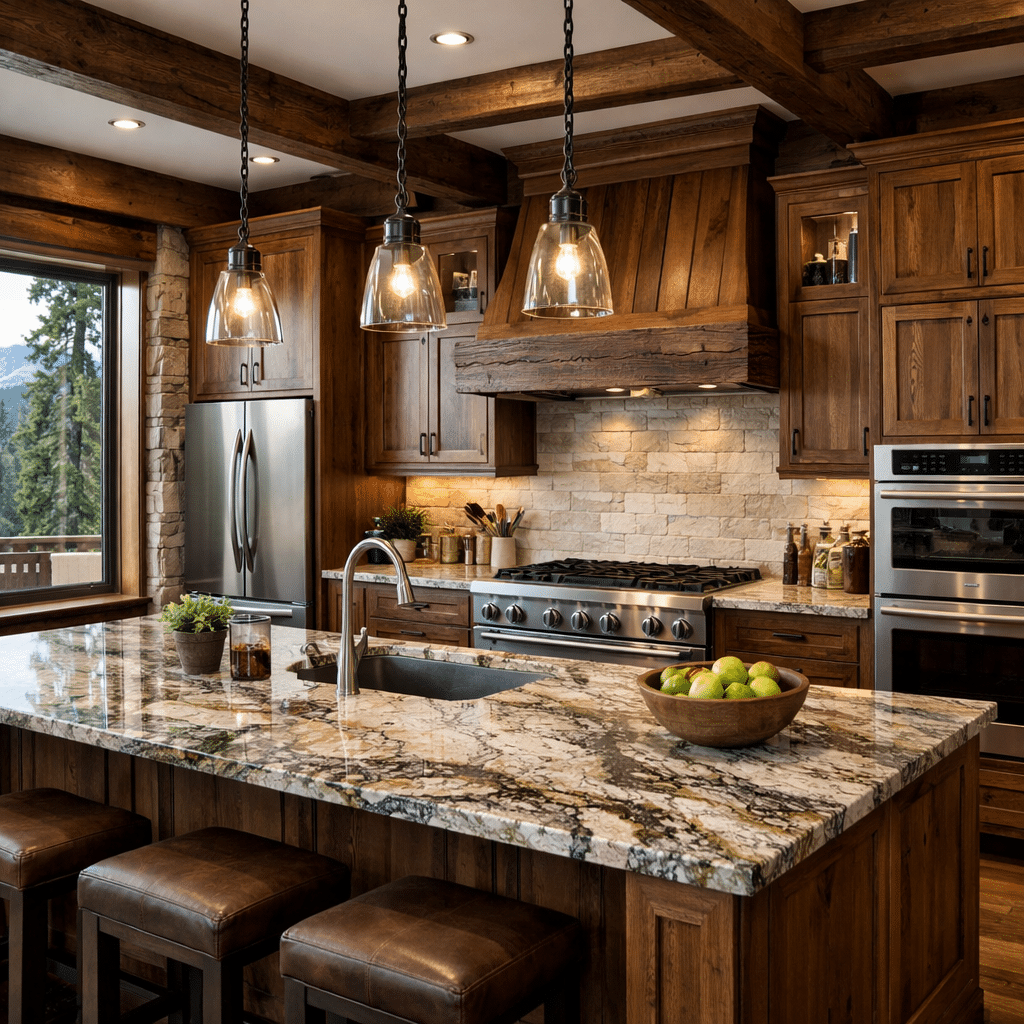
Amish workshops build cabinets to exact specifications. If your kitchen includes a 47-inch space, you receive a 47-inch cabinet. This eliminates filler strips and maximizes usable interior space. For kitchens with unusual layouts—angled walls, curved islands, or irregular ceiling heights—custom fabrication proves particularly valuable.
Beyond sizing, Amish makers accommodate design requests that factories can’t consider: mixing wood species within single cabinets, incorporating reclaimed lumber with documented provenance, creating furniture-quality details like hand-cut dovetail joints visible on drawer boxes, and designing entirely custom door profiles that don’t match any standard catalog option. Our design team will arrange consultations where these possibilities can be explored based on your specific vision.
The limitation with Amish customization isn’t capability but rather communication and revision cycles. Factory designs rely on computer renderings that show exactly how your kitchen will look before production begins. Amish designers typically work from detailed drawings and physical samples, which require more interpretive skill from homeowners. Significant design changes after production begins can be difficult to accommodate since work proceeds sequentially rather than through modular assembly.
Special Function Cabinets
Both sources handle specialized storage needs differently. Factory catalogs include extensive options for corner solutions (lazy susans, pull-out shelving), appliance garages, spice organizers, and trash pull-outs. These options install as standard components with predictable dimensions and mechanisms.
Amish workshops build custom solutions tailored to your specific items. Rather than installing a generic spice pull-out rated for standard bottle sizes, an Amish maker can dimension the organizer to match your actual spice collection, integrate it seamlessly into a larger cabinet assembly, and finish it to match surrounding woodwork. The functionality advantage depends on whether you value standardized proven solutions or personalized storage that maximizes every cubic inch.
Material Quality and Construction Methods
Material selection and construction techniques reveal fundamental quality differences between factory and Amish approaches, though both can produce durable cabinets when executed properly.
Factory Construction Standards
Factory direct cabinets typically use plywood or furniture-grade particleboard for cabinet boxes (the structural frame), with solid wood or engineered wood products for door and drawer fronts. High-quality factories use 1/2″ or 5/8″ plywood with hardwood veneer faces, joined with dado grooves and confirmat screws reinforced with corner blocks. Economy factories may use 3/8″ particleboard with stapled joints, which proves less durable in moisture-prone environments.
The KCMA certification program provides standardized testing for factory cabinets, including cycle tests for door operation (25,000 cycles), drawer operation (25,000 cycles), and finish durability assessments. Certification offers quality assurance—you know the cabinets meet specific performance benchmarks before installation. Our network partners exclusively work with KCMA-certified factories because this certification provides recourse if products fail prematurely.
Amish Construction Approach
Amish cabinet boxes typically use solid wood throughout—not just for visible components but for the entire structural system. Face frames, cabinet sides, backs, and even shelving often feature 3/4″ solid hardwood (commonly maple, oak, or cherry) rather than plywood or particleboard. This construction method adds significant weight and cost but provides exceptional long-term durability.
Joinery techniques distinguish Amish work most clearly. Where factories rely on mechanical fasteners (screws, staples, confirmat bolts), Amish makers employ traditional joinery: mortise-and-tenon connections for face frames, dovetail joints for drawer boxes, and dado grooves for shelf installations. These joints create mechanical strength independent of adhesives or fasteners, meaning the cabinets maintain structural integrity even if glue fails over decades.
However, Amish construction lacks standardized testing certifications. You’re relying on the workshop’s reputation and demonstrated craftsmanship rather than third-party validation. This works well when connecting through established networks (like our curated workshop relationships), but it creates risk when working directly with unfamiliar makers.
The Weight Consideration
Solid wood construction makes Amish cabinets substantially heavier than factory equivalents—often 40-60% more weight for comparable sizes. This weight provides a tangible quality impression (the cabinets feel substantial and permanent), but it also creates installation challenges. Wall cabinets require more robust mounting systems, and islands may need reinforced flooring depending on your home’s structural design.
Factory cabinets’ lighter weight simplifies installation and reduces shipping costs. For second-floor kitchen renovations or older homes with questionable floor systems, the weight difference may prove consequential beyond just quality perceptions.
Environmental Durability
Both construction methods handle typical kitchen humidity adequately when properly finished. However, solid wood responds differently to moisture than plywood or particleboard. Solid wood expands and contracts more noticeably with seasonal humidity changes—a characteristic that Amish makers anticipate in their designs by allowing expansion gaps and using floating panel construction for door assemblies.
Plywood and particleboard remain dimensionally stable across humidity fluctuations but can suffer catastrophic failure if water penetrates through damaged finish. Once particleboard cores absorb water, they swell permanently and lose structural integrity. Solid wood can often be sanded and refinished after water exposure, provided the damage is addressed quickly.
Finish and Door Style Options
Finish quality and door styling represent areas where factory and Amish sources each demonstrate distinct advantages depending on aesthetic preferences.
Factory Finish Excellence: Painted Cabinets
Factory spray booth technology produces extraordinarily consistent painted finishes. Automated systems apply multiple thin coats with precise control over paint viscosity, booth temperature, and curing conditions. The result is a flawless painted surface—no brush marks, no runs, perfectly consistent color from door to door.
Modern factory paints use catalyzed conversion varnish or pre-catalyzed lacquer systems that cure into extremely durable surfaces resistant to household chemicals, moisture, and physical wear. These finishes significantly outperform traditional paint products in durability testing. For homeowners preferring painted cabinets—particularly popular colors like whites, grays, and navy—factory finishing delivers results that hand-application methods struggle to match.
Color matching across product replacements or future additions also favors factory sources. Manufacturers maintain strict color standards using spectrophotometer verification, meaning a “Dover White” door ordered today matches one ordered three years from now. This consistency proves valuable when kitchens expand or when damage requires component replacement.
Amish Finish Excellence: Natural Wood and Stains
Hand-applied finishes showcase natural wood grain in ways that factory processes cannot replicate. Amish finishers apply oil-based stains or dyes that penetrate deeply into wood surfaces, enhancing grain patterns and creating depth that surface-film finishes lack. The topcoat—typically hand-rubbed lacquer, tung oil, or conversion varnish—builds gradually through multiple applications, each sanded smooth before the next layer.
This approach excels with wood species offering distinctive grain patterns: quarter-sawn white oak with its ray fleck figure, walnut with its rich chocolate tones and varied grain, cherry that deepens into amber-red over years of light exposure. Factory finishing can apply stain to wood doors, but the results typically lack the visual depth and grain enhancement that hand-application provides.
Amish workshops can also execute specialized finishes—distressing, hand-planing for texture, applying multiple stain colors to highlight grain variations, or creating authentic antique reproductions. These artistic finishes require skilled judgment during application, something that automated spray systems cannot provide. However, color matching for future additions becomes more challenging since hand-applied finishes involve craftsperson interpretation rather than standardized formulas.
Door Style Range
Factory catalogs offer extensive door style options: shaker profiles, raised panels, recessed panels, slab doors, beadboard inserts, glass panel options, and numerous detail variations. These styles are designed for efficient production—profiles that can be machined quickly and assembled without excessive hand-fitting.
The advantage of factory door selection is immediate visualization. Showrooms display full door samples in various finishes, and computer renderings show precisely how your chosen style will look in your specific kitchen layout. This removes guesswork from the design process.
Amish workshops can replicate virtually any historical door style or create entirely custom profiles based on inspiration photos, architectural details from your home, or original designs developed through collaboration. If you want to match existing cabinetry from your 1920s home or incorporate design elements from a European kitchen you photographed while traveling, Amish makers can execute these visions. The limitation is communication—translating your vision into specifications the workshop can execute requires more detailed consultation than selecting from a factory catalog.
The Hardware Integration Question
Factory cabinets arrive with standardized hardware mounting holes drilled precisely by CNC machinery. Cabinet doors accept standard European-style hinges (35mm boring), and drawer fronts include pre-drilled pull mounting holes at specified centers (typically 3″ or 4″ for pulls, centered for knobs).
This standardization simplifies hardware selection—you choose from thousands of compatible options knowing they’ll fit perfectly. However, it also means your hardware choices work within predetermined mounting positions. Amish makers drill hardware locations to your exact specifications, allowing unusual handle placements, integrated pulls routed into door edges, or custom hinge applications for furniture-style aesthetics.
2026 Remodeling Cost Guide
Don’t get ripped off. See real pricing for bathrooms, kitchens, and HVAC.
Updated for 2026 Market Rates
Pricing Structure and Value Analysis
Understanding cabinet pricing requires looking beyond per-linear-foot costs to consider total project investment, long-term value, and what’s included in quoted prices.
Factory Direct Pricing Structure
Factory direct dealers typically quote $150-350 per linear foot for complete cabinet packages, though this range varies enormously based on construction quality, finish selection, and included features. Economy lines using particleboard construction and thermofoil finishes start around $150-180 per linear foot. Mid-range options with plywood construction and upgraded finishes run $200-280 per linear foot. Premium factory lines offering extensive customization and superior materials reach $300-350 per linear foot.
These prices typically include cabinet boxes, doors, drawer boxes, drawer glides, hinges, and basic shelf pins. Items not included: crown molding, decorative end panels, toe kick material, installation labor, countertops, and hardware (pulls/knobs). Our dealer partners provide itemized quotes breaking down what’s included versus add-on costs to prevent budget surprises.
Factory pricing offers transparency advantages. Published price lists for each door style, finish option, and cabinet configuration mean you can verify that quoted prices align with manufacturer standards. Dealers work on fixed markup percentages, so aggressive shopping can yield meaningful savings by comparing multiple dealers offering the same factory line.
Amish Custom Pricing
Amish cabinet pricing typically ranges from $350-800+ per linear foot, with complex designs or exotic woods pushing costs higher. This premium reflects solid wood construction, hand-crafted joinery, custom sizing for each component, and individualized finishing.
However, Amish pricing includes more comprehensive packages. Quotes typically cover all necessary components: crown molding, decorative panels, custom toe kicks, furniture-quality drawer boxes, and often include certain hardware options. The all-inclusive approach means fewer surprise add-ons during project execution.
Pricing transparency works differently with Amish sources. Rather than working from published price lists, workshops provide custom quotes based on specific project requirements. This makes comparison shopping more difficult—you’re comparing unique proposals rather than standardized products. Our design team will arrange consultations with multiple workshop options when clients want competitive bidding, though the custom nature of proposals means you’re not comparing identical offerings.
Value Analysis Over Time
Short-term value clearly favors factory direct. Lower upfront costs, faster delivery, and known quantities make factory cabinets excellent choices for budget-conscious renovations, rental properties, or homes where resale within 5-10 years seems likely.
Long-term value calculations become more complex. Amish cabinets often outlast their original kitchens—they’re built to remain functional and attractive for 50+ years. Solid wood construction means they can be refinished multiple times if tastes change or finishes wear. This durability creates heirloom potential; the cabinets may genuinely serve multiple generations.
Factory cabinets, while durable when properly maintained, typically have finite lifespans. Particleboard cores cannot be refinished if surfaces wear. Mechanical failures in hardware or hinges require replacement rather than repair. The National Association of Home Builders estimates quality factory cabinets last 20-30 years under normal use—substantial but not multi-generational.
Hidden Cost Considerations
Factory cabinets create predictable installation costs since dimensions follow standard patterns. Installers familiar with specific factory lines can estimate labor accurately and complete installation efficiently. Amish cabinets sometimes require additional installation time due to weight and custom configurations, potentially adding 20-30% to labor costs compared to factory equivalents.
Repair costs favor Amish cabinets long-term. Damaged solid wood components can be repaired by skilled woodworkers. Factory cabinets with particleboard damage often require complete component replacement since repairs to engineered materials rarely prove structurally sound or aesthetically acceptable.
Installation Process and Requirements
Installation expectations differ substantially between factory and Amish sources, affecting both timelines and contractor coordination.
Factory Cabinet Installation
Factory cabinets arrive in numerous boxes—each base cabinet, wall cabinet, and drawer box ships separately with assembly required on-site. A typical 10’x12′ kitchen might involve 25-35 individual boxes that must be unpacked, assembled, positioned, leveled, and secured. Installation typically requires 2-3 days for experienced crews working full-time.
The assembly process involves attaching backs to cabinet boxes, installing shelves and shelf pins, mounting hinges to doors, and connecting adjacent cabinets with joint fasteners. This work happens in your kitchen, creating substantial dust and requiring protected workspace. Professional installation is strongly recommended—attempting DIY installation without cabinetry experience often results in misalignment issues that compromise both function and appearance.
Factory systems include detailed installation instructions and standardized mounting hardware. Cabinets connect to wall studs through hanging rails or direct screw mounting, with careful leveling ensuring doors operate properly and countertop surfaces remain even. Our installation partners who specialize in factory cabinet systems can typically provide firm fixed-price quotes since the work follows predictable patterns.
Amish Cabinet Installation
Amish cabinets often arrive partially assembled or as complete units, particularly for base cabinets. Rather than assembling boxes on-site, installers position finished cabinet sections, level them, and secure them to walls. This approach reduces on-site assembly time but creates different challenges—maneuvering large, heavy assembled units through doorways and around corners requires planning and sometimes temporary door removal.
Custom sizing means Amish cabinets should fit their designated spaces precisely, but this also means there’s less margin for adjustment if site conditions differ from original measurements. Factory cabinets’ modular nature allows some flexibility through filler adjustment; custom units built to exact dimensions require perfect measurement accuracy before production begins.
Installation timelines for Amish cabinets typically run 1-2 days for comparable kitchen sizes—faster than factory installation due to reduced assembly requirements. However, Amish cabinets’ weight may require additional labor for safe handling. Two-person installation crews sometimes need to expand to three people for large wall cabinet units or heavy island assemblies.
Site Measurement Accuracy
Factory systems tolerate some measurement imprecision because filler strips accommodate discrepancies between cabinet modules and actual wall dimensions. Professional designers measure carefully but know the modular system provides adjustment capability during installation.
Amish custom work requires exceptional measurement accuracy. A 1/2-inch error in wall measurement translates directly into a cabinet that doesn’t fit properly. This is why our design team will arrange for preliminary site assessments, often visiting twice—once for initial rough measurements during planning and again for final verification measurements before the workshop begins production. These verification steps prevent costly remakes that delay projects by months.
Coordination with Other Trades
Both cabinet types require coordination with plumbing, electrical, and countertop contractors. Factory installation typically happens first, followed by other trades working around standard cabinet configurations. Amish custom cabinets sometimes require closer coordination since unusual dimensions or custom features may affect appliance placement, electrical outlet positions, or plumbing rough-in locations.
For complex renovations involving structural changes, appliance upgrades, or significant layout modifications, factory cabinets’ standardized dimensions simplify trade coordination. Contractors familiar with standard cabinet depths, heights, and widths can plan their work without custom cabinet drawings. Amish projects benefit from detailed drawings distributed to all trades before work begins, ensuring everyone understands how custom dimensions affect their specific scope.
Choosing the Right Option for Your Needs
The factory-versus-Amish decision comes down to prioritizing what matters most for your specific situation, budget, and long-term expectations.
Choose Factory Direct Cabinets When:
Speed is essential. If your renovation timeline allows only 6-10 weeks from ordering to installation completion, factory direct represents your only realistic option. Contractors often prefer factory timelines because they maintain project momentum without extended waiting periods between demolition and completion.
You prefer painted finishes. Factory spray booth technology produces painted surfaces that hand-application methods cannot match for consistency and durability. If your vision centers on crisp white shaker cabinets, soft gray transitional styling, or bold colored statements, factory finishing delivers superior results.
Your kitchen follows standard dimensions. If your space doesn’t include unusual angles, irregular wall lengths, or height variations, factory modular systems work perfectly well. Standard 10’x12′ galley kitchens or U-shaped layouts with normal ceiling heights fit factory modules efficiently without sacrificing functionality.
Budget constraints are significant. Factory cabinets’ lower per-linear-foot costs create substantial total project savings—often $8,000-15,000 less than Amish equivalents for average kitchens. This savings can fund other renovation priorities like appliance upgrades, countertop improvements, or enhanced flooring.
You’re renovating for resale. If home sale within 5-7 years seems likely, the premium cost of Amish cabinets may not generate proportional return on investment. Quality factory cabinets appeal to broad buyer markets while leaving budget room for other value-adding improvements.
Choose Amish Custom Cabinets When:
Your kitchen includes unusual dimensions. Angled walls, non-standard ceiling heights, curved islands, or irregular wall lengths all benefit from custom sizing that maximizes space without visible filler strips or awkward proportions. The premium you pay for custom work returns value through superior space utilization.
Natural wood aesthetics are priorities. If your design vision emphasizes wood grain beauty, warmth, and organic variation, Amish hand-applied finishes showcase these qualities far better than factory alternatives. For wood species like walnut, quarter-sawn oak, or cherry, the finishing quality difference justifies premium pricing.
You’re building heirloom quality. If you envision your kitchen serving your family for decades and potentially passing to the next generation, Amish solid wood construction and traditional joinery create furniture-quality durability. The cabinets become part of your home’s permanent character rather than temporary installations.
You need truly custom features. Requests beyond factory capabilities—mixing wood species, incorporating reclaimed materials, matching historical architectural details, or creating furniture-influenced designs—require custom workshop capabilities. Our design team will arrange consultations where these specialized requests can be explored in detail.
Timeline flexibility exists. If your renovation schedule accommodates 12-16 week cabinet production, Amish timelines become manageable rather than prohibitive. Homeowners living in current residences while renovating second homes, vacation properties, or completed additions often have this flexibility.
The Hybrid Approach
Some homeowners optimize value by combining both sources. We’ve connected clients who used factory cabinets for the majority of their kitchen (perimeter cabinets, pantries) while commissioning Amish workshops for showpiece elements—a custom island with furniture details, a specialty hutch, or display cabinets with glass doors and interior lighting. This approach delivers Amish craftsmanship for visible focal points while controlling overall project costs through factory efficiency for workhouse storage.
Regional Market Considerations
Your location influences which option works best practically. Factory dealers maintain nationwide distribution, making products accessible anywhere. However, Amish workshop relationships concentrate in Ohio, Indiana, and Kentucky—homeowners in these regions access the broadest workshop options and lowest delivery costs.
For Ohio Valley homeowners in Southern Ohio and Northern Kentucky communities like Piketon, Portsmouth, Ashland, Chillicothe, and Maysville, proximity to Amish workshops offers significant advantages. Shorter delivery distances reduce shipping costs by $1,000-2,000 compared to cross-country transport.
Shipping Amish cabinets to distant markets adds substantial expense ($2,000-4,000+ for cross-country delivery) that may undermine the value proposition. Additionally, having your cabinet maker within driving distance simplifies measurement verification, sample review, and addressing any post-installation adjustments.
Our network includes both high-speed factory dealers and exclusive Amish workshops across the Midwest. We can help you evaluate which source aligns best with your specific requirements, whether that’s finding factory partners who stock your preferred finish or connecting with workshops known for particular wood species or finishing techniques.
Frequently Asked Questions
Can Amish cabinet makers produce painted finishes as well as factory spray booths?
Amish workshops can apply painted finishes, but the results typically don’t match factory spray booth consistency. Hand-applied paint, even with professional technique, shows subtle texture variations and requires more frequent touch-ups over time. The curing environment in workshops also varies more than climate-controlled factory booths, potentially affecting long-term paint adhesion. If painted cabinets are your preference, factory finishing technology delivers superior results. If you want Amish craftsmanship but appreciate painted looks, consider requesting natural wood cabinets with the understanding that minor hand-work character is part of the aesthetic rather than a flaw.
Do factory direct cabinets use real wood, or are they all particle board and veneers?
Factory construction varies by price point and product line. Economy factory cabinets often use particleboard boxes with thermofoil or laminate surfaces. Mid-range and premium factory lines typically use plywood cabinet boxes (real wood veneers over plywood cores) with solid wood face frames and door/drawer fronts. The highest factory tiers offer solid wood construction comparable to Amish approaches but maintain factory efficiency through CNC machinery and standardized designs. When evaluating factory options, ask specifically about box construction materials—quality manufacturers clearly disclose whether they use plywood, particleboard, or solid wood for various components. KCMA certification also requires material disclosure in product specifications.
How much can I really save by choosing factory cabinets over Amish custom for an average kitchen?
For a typical 10’x12′ kitchen (approximately 25 linear feet of cabinetry), factory direct cabinets in the mid-range quality tier cost roughly $6,000-8,500 total. Comparable Amish custom work costs $10,000-18,000 depending on wood species, finish complexity, and detail level. This represents $4,000-10,000 in direct savings, though Amish quotes often include items (crown molding, decorative panels, hardware) that factory quotes price separately. When comparing total installed costs including all components, realistic savings typically range from $5,000-12,000 for factory choices in average kitchens. Larger kitchens or those with extensive upper cabinets amplify these differences since per-linear-foot pricing scales directly with cabinet quantity.
If I choose Amish cabinets, what happens if I need to add cabinets in 5-10 years when I expand my kitchen?
Amish additions depend on workshop continuity and finish matching capabilities. If the original workshop remains operational and you retained wood species and stain information, they can typically produce matching cabinets with reasonable consistency. However, hand-applied finishes involve craftsperson judgment, so perfect matching isn’t guaranteed—expect close coordination but slight variations possible. Natural wood also ages and changes color through UV exposure, meaning new cabinets may appear slightly different initially even if stain formulas match exactly. If your workshop has closed or moved to different ownership, our network can help identify craftspeople capable of matching existing work based on samples and finish analysis. The solid wood construction advantage is that even imperfect matches can be made acceptable through refinishing both old and new work simultaneously if needed.
Are Amish cabinet makers actually better woodworkers than factory workers, or is that just marketing romance?
The skill difference isn’t about individual worker talent but rather production methodology. Factory workers operate specialized machinery executing specific tasks repeatedly—one worker might only cut cabinet sides all day using CNC equipment programmed by engineers. Amish craftspeople typically learn comprehensive cabinetmaking including joinery, finishing, and assembly across entire projects. This breadth of skill enables problem-solving for unusual situations and artistic judgment during execution. However, factory production quality isn’t necessarily inferior—it’s simply optimized differently. CNC machinery cuts dados and rabbets with greater precision than hand-tool work, and quality control systems catch defects systematically. The “better” question depends on what you value: the artistic judgment and comprehensive skill of traditional craftsmanship, or the engineering precision and systematic quality control of modern manufacturing. Both approaches produce excellent cabinets when executed well within their respective methodologies.
Making Your Cabinet Decision with Confidence
The factory-versus-Amish cabinet decision represents one of the most significant choices in kitchen renovation planning. However, there’s genuinely no universal “best” answer. Factory direct systems excel at painted finishes, rapid delivery, standardized quality, and cost efficiency. Meanwhile, Amish custom workshops provide natural wood artistry, exact custom sizing, heirloom construction quality, and furniture-grade details.
Ultimately, your priorities determine which advantages matter most for your specific project. At Kore Komfort Solutions, we connect homeowners with both high-speed factory dealers and exclusive Amish workshops across the Midwest because we understand different projects demand different solutions.
Some kitchens need the speed and painted perfection that factory systems deliver. Others deserve the custom wood craftsmanship and multi-generational durability that Amish makers provide. Consequently, our role is helping you identify which path aligns with your specific timeline, budget, aesthetic vision, and long-term expectations.
Whether you choose factory efficiency or custom craftsmanship, the most important factor is working with reputable sources who communicate clearly, deliver on promises, and stand behind their work. Furthermore, connecting with experienced local contractors who understand cabinet installation ensures proper execution regardless of which cabinet source you select.
Our network includes both types of cabinet partners because we’ve verified their reliability through hundreds of successful kitchen connections. The cabinets you choose will define your kitchen’s character for decades—making that choice based on honest assessment of your needs rather than generic advice ensures you’ll love the results long after installation completes.
FTC Disclosure: Kore Komfort Solutions earns commissions when connecting homeowners with cabinet manufacturers and dealers through our network. This affiliate relationship supports our educational content creation but does not influence our honest assessments. We maintain relationships with both factory and Amish sources specifically to provide unbiased guidance based on your needs rather than our commission structures.

Author: Mike Warner
Mike Warner — Founder, Kore Komfort Solutions LLC U.S. Army veteran. 30 years in the trades — HVAC installation, kitchen and bathroom remodeling, and residential construction across Alaska, Washington, Colorado, Ohio, Kentucky, and Tennessee. I've pulled permits, managed crews, run service calls at midnight, and built a business from a single truck. Now I build the digital infrastructure that helps contractors compete and win. Kore Komfort Solutions exists for one reason: to give small and mid-size contractors ($2M–$10M) the same AI-powered tools, websites, and business systems that the big operations use — without the enterprise price tag or the learning curve. Through Kore Komfort Digital, we design and manage high-performance WordPress websites engineered to rank on Google and convert local searches into booked jobs. Through Rose — our AI-powered business management system currently in development — we're building the future of how contractors handle leads, scheduling, estimates, and customer communication. I write about what I know: the trades, the technology reshaping them, and how to build a contracting business that runs on systems instead of chaos. Every recommendation on this site comes from someone who's actually done the work — not a marketer who Googled it.