Costs, Options & What to Know
Last Updated: January 2025 | Read Time: 15 minutes
- Key Takeaways
- Why Cincinnati Homeowners Are Making the Switch
- Types of Tub-to-Shower Conversions in Cincinnati
- Cincinnati Walk-In Shower Conversion Costs
- Shower Conversion Timeline and Process
- Design Options and Materials
- Accessibility and Aging-in-Place Features
- Permits and Regulations in Cincinnati
- Choosing a Shower Conversion Contractor in Cincinnati
- Recommended Products
- Frequently Asked Questions
Key Takeaways
- Average cost in Cincinnati: $4,500 to $15,000 for a complete tub-to-shower conversion, with most homeowners spending between $6,500 and $10,000
- Timeline: Standard conversions take 3-5 days; complex custom projects may require 1-2 weeks
- ROI potential: Walk-in shower conversions typically recoup 60-70% of costs at resale in Greater Cincinnati markets
- Permit requirements: Most Cincinnati conversions require a plumbing permit; electrical permits needed if adding features
- Best time to schedule: Late winter through early spring offers better contractor availability and potential off-season pricing
Affiliate Disclosure: This article contains affiliate links to products we recommend. If you purchase through these links, we may earn a small commission at no additional cost to you. This helps support our educational content while allowing us to recommend quality products. We only recommend products we believe provide genuine value for Ohio Valley homeowners. Read our full affiliate disclosure policy.
Converting an old bathtub to a modern walk-in shower has become one of the most requested bathroom renovations across Greater Cincinnati. Whether you’re updating a 1960s ranch in Anderson Township, modernizing a Victorian-era bathroom in Hyde Park, or preparing a West Chester home for aging in place, understanding what this project involves helps you make informed decisions and avoid costly surprises.
Cincinnati’s housing stock presents unique considerations for walk-in shower conversions. Many homes built during the region’s mid-century boom feature standard 60-inch alcove tubs with cast iron construction, while older neighborhoods like Mt. Adams and Clifton may have clawfoot tubs or unusual plumbing configurations. The region’s clay-heavy soil and basement moisture concerns also mean proper waterproofing isn’t optional—it’s essential for protecting your investment.
This guide covers everything Cincinnati-area homeowners need to know about walk-in shower conversions, from realistic cost expectations to choosing the right contractor for your specific situation.
Why Cincinnati Homeowners Are Making the Switch
The shift from traditional bathtubs to walk-in showers reflects changing preferences and practical needs among Ohio Valley homeowners. Several factors drive this trend in the Cincinnati market specifically.
Aging housing stock demands updates. Hamilton County alone contains over 350,000 housing units, with a significant percentage built before 1980. Many of these homes feature outdated bathrooms with worn fiberglass tub surrounds, cracked tile, and inefficient layouts. A walk-in shower conversion addresses multiple issues simultaneously while adding contemporary appeal.
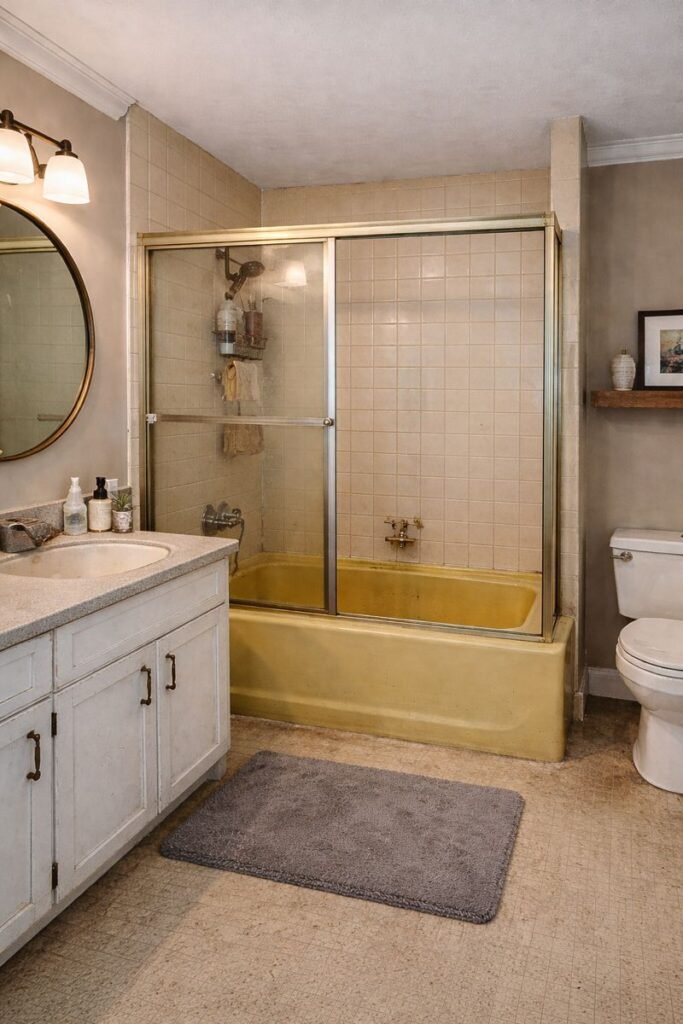
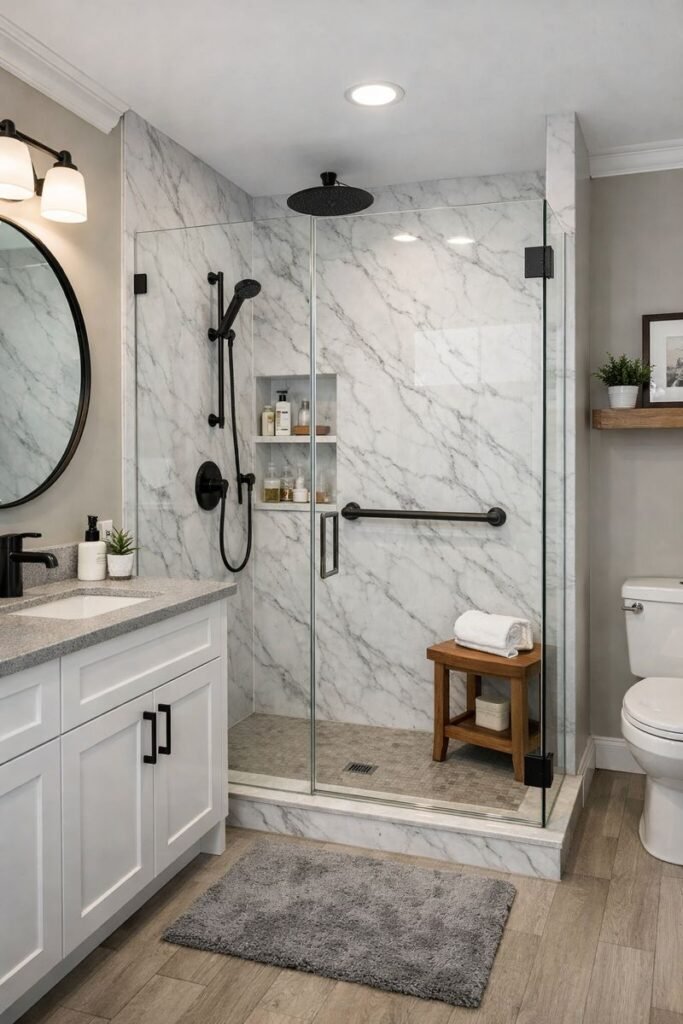
Multigenerational living is increasing. More Cincinnati families are accommodating elderly parents or planning for their own future mobility needs. Walk-in showers eliminate the fall risk associated with stepping over tub walls—a particularly important consideration given that bathroom falls send over 230,000 Americans to emergency rooms annually.
Daily practicality wins out. Survey data consistently shows that most adults prefer showers over baths for daily hygiene. That seldom-used tub occupies valuable square footage that could serve better as an accessible, easy-to-clean shower space.
Water efficiency matters. Modern shower systems use significantly less water than filling a bathtub. With Cincinnati water rates continuing to climb, reduced consumption translates to measurable savings over time.
Resale considerations favor updates. While real estate professionals caution against removing the only bathtub in a home, converting a second bathroom’s tub to a walk-in shower typically enhances marketability. Cincinnati homebuyers increasingly expect updated bathrooms, and a well-executed shower conversion signals that a home has been properly maintained.
Types of Tub-to-Shower Conversions in Cincinnati
Not all tub-to-shower conversions are created equal. The approach that makes sense for your Cincinnati home depends on your budget, timeline, existing bathroom configuration, and long-term goals.
Prefabricated Shower Unit Installation
This approach removes the existing tub and installs a one-piece or multi-panel shower unit in its place. Prefabricated units work well for standard 60-inch alcove spaces and offer the fastest installation timeline—often completed in a single day for straightforward situations.
Best for: Budget-conscious projects, rental properties, and homeowners prioritizing speed over customization. Standard alcove configurations in homes built from the 1950s through 1990s are ideal candidates.
Typical Cincinnati cost range: $3,500 to $7,500 installed, depending on unit quality and any necessary plumbing modifications.
Limitations: Limited design flexibility, standard sizing may not fit non-standard spaces, and the finished look is functional rather than luxurious.
Custom Tile Shower Conversion
A custom tile shower involves building a new shower pan (either traditional mortar bed or modern foam systems), installing cement board or similar substrate, waterproofing the entire assembly, and finishing with tile and grout. This approach offers unlimited design possibilities but requires skilled installation.
Best for: Homeowners seeking a high-end look, unusual bathroom configurations, and those planning significant value additions. Popular in Cincinnati’s historic neighborhoods where period-appropriate aesthetics matter.
Typical Cincinnati cost range: $8,000 to $18,000 depending on tile selection, size, and complexity. High-end natural stone installations can exceed $25,000.
Limitations: Longer installation timeline (typically 5-10 days), higher cost, and quality depends heavily on installer skill. Improper waterproofing can lead to serious moisture damage.
Shower Pan with Wall System
This hybrid approach combines a prefabricated or custom shower pan with wall panels (acrylic, solid surface, or cultured stone). It offers a middle ground between fully prefabricated units and complete custom work.
Best for: Homeowners wanting a cleaner look than basic fiberglass but without full custom tile costs. Works well for contemporary aesthetics in mid-range bathroom updates.
Typical Cincinnati cost range: $5,500 to $12,000 depending on materials selected and configuration.
Limitations: Panel joints require proper sealing, and some wall systems can appear less authentic than tile to discerning buyers.
Barrier-Free/Curbless Conversion
Curbless showers eliminate the traditional threshold entirely, creating a seamless transition from bathroom floor into the shower space. This requires careful floor slope engineering and comprehensive waterproofing.
Best for: Wheelchair accessibility, aging-in-place applications, and high-end spa-like designs. Increasingly requested in Cincinnati luxury renovations.
Typical Cincinnati cost range: $10,000 to $20,000 or more due to the additional labor and materials required for proper drainage and waterproofing.
Limitations: Requires adequate floor space, may necessitate floor modifications extending beyond the shower area, and demands expert installation to prevent water escape.
Cincinnati Walk-In Shower Conversion Costs
Understanding where your money goes helps you evaluate quotes and make informed decisions about where to invest or economize. The following breakdown reflects current Cincinnati-area pricing as of early 2026.
Labor Costs
Labor typically represents 40-50% of total project cost for walk-in shower conversions. Cincinnati-area rates for qualified bathroom remodeling contractors generally fall between $65 and $95 per hour for skilled tradespeople, though project pricing (rather than hourly) is more common for complete conversions.
Demolition and disposal: $300-$800. Cast iron tubs cost more to remove than fiberglass or steel due to weight and cutting requirements. Cincinnati disposal fees vary by material type.
Plumbing modifications: $400-$1,500. Relocating drain and supply lines adds significant cost. Simple valve replacement runs less than extensive reconfiguration.
Waterproofing and substrate: $600-$1,200 for proper membrane installation and cement board. This is not an area to cut corners—Cincinnati’s humidity and older homes make thorough waterproofing essential.
Tile installation: $800-$2,500+ depending on square footage, pattern complexity, and tile size. Large-format tiles require perfectly flat substrates; intricate patterns demand more cutting and fitting time.
Electrical work: $200-$600 if adding ventilation, lighting, or heated floors. Cincinnati requires licensed electricians for bathroom electrical work.
Materials Costs
Shower pan/base: $200-$1,200. Basic fiberglass runs $200-$400; solid surface bases $400-$800; custom tile-ready foam pans $300-$600.
Wall materials: $400-$3,000+. Basic fiberglass surrounds start around $400; acrylic panels $600-$1,500; tile materials $800-$3,000+ depending on selection.
Shower door/enclosure: $300-$2,500. Framed sliding doors offer budget-friendly options; frameless glass enclosures command premium pricing but dramatically elevate aesthetics.
Fixtures and valves: $200-$1,500. Basic pressure-balance valves start around $200; thermostatic systems with multiple outlets can exceed $1,000 for fixtures alone.
Accessories: $100-$500. Shelving, grab bars, shower seats, and similar additions are often overlooked in initial budgets.
Cost Summary by Project Type
Budget-friendly prefab conversion: $3,500-$6,000 total. Basic fiberglass or acrylic unit, standard fixtures, simple configuration.
Mid-range custom tile shower: $8,000-$12,000 total. Ceramic or porcelain tile, quality fixtures, glass enclosure, professional installation.
High-end luxury conversion: $15,000-$25,000+ total. Natural stone, premium fixtures, frameless glass, custom features, possibly curbless entry.
Quick Cost Reference: Cincinnati Walk-In Shower Conversions (2025)
| Project Type | Cost Range | Timeline |
| Prefabricated Unit | $3,500–$7,500 | 1–2 days |
| Hybrid (Pan + Wall Panels) | $5,500–$12,000 | 2–4 days |
| Custom Tile Shower | $8,000–$18,000 | 5–10 days |
| Curbless/Barrier-Free | $10,000–$20,000+ | 7–12 days |
Hidden Costs to Anticipate
Experienced Cincinnati contractors account for potential surprises, but homeowners should understand common additional expenses:
Subfloor damage: Older Cincinnati homes frequently reveal rotted subfloor once tubs are removed. Repair costs range from $300-$1,000 depending on extent.
Outdated plumbing: Galvanized pipes, improper venting, or undersized drains may require updating to meet current code. Budget $500-$2,000 for unexpected plumbing work.
Asbestos or lead: Homes built before 1980 may contain hazardous materials in flooring, wall materials, or pipe insulation. Testing runs $200-$400; remediation adds significantly to project cost.
Permit fees: Cincinnati permit costs typically range from $75-$200 depending on project scope.
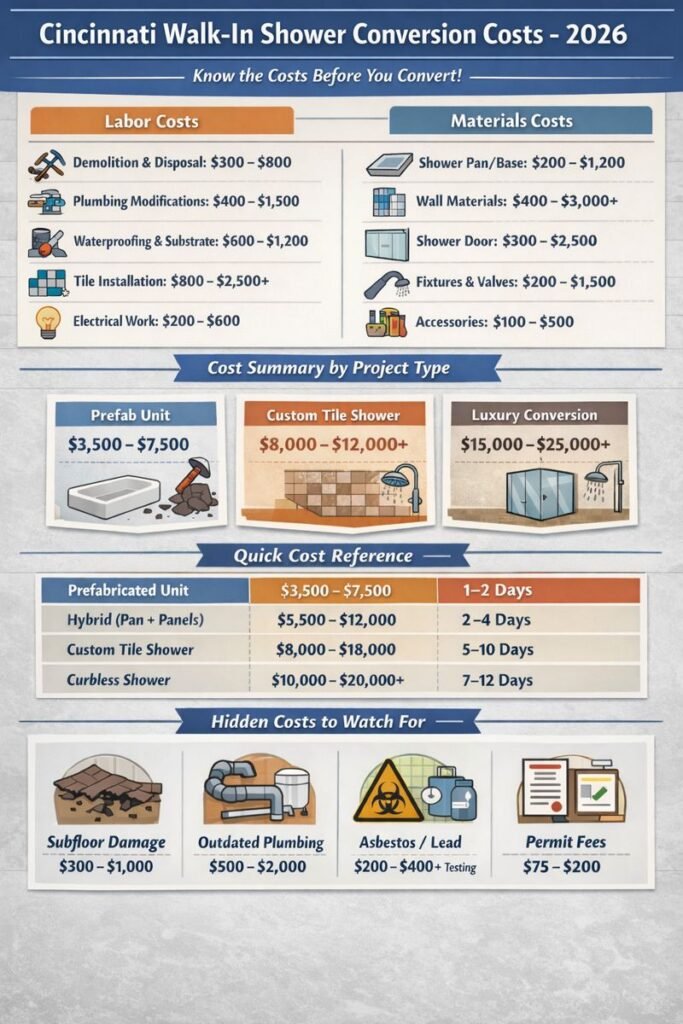
We have a bathroom remodeling calculator that will give a rough estimate for planning purposes. We also have a bathroom remodeling assesment tool that is great for planning your renovation.
Shower Conversion Timeline and Process
Understanding the typical conversion process helps you plan appropriately and recognize quality workmanship versus rushed shortcuts.
Pre-Construction Phase (1-4 weeks)
Before any demolition begins, proper planning sets projects up for success. This phase includes initial consultation and measurements, design selections (tiles, fixtures, enclosure style), permit applications where required, and material ordering. Cincinnati-area lead times for specialty tiles or custom glass can extend 2-4 weeks, so early selection matters.
Day 1: Demolition
Removal of the existing tub, surrounding wall materials (if applicable), and any damaged substrate. Skilled crews protect adjacent surfaces and contain dust. The bathroom is typically unusable during active construction.
Hire the Right Contractor the First Time
Most homeowners get three bids and pick the middle one. That’s not vetting, that’s guessing. For $29.95 you can know the permit history, complaint record, and review patterns of every contractor you’re considering before anyone sets foot in your home.
Days 2-3: Rough-In and Preparation
Plumbing modifications occur during this phase—relocating drains, updating supply lines, installing new valve bodies. Electricians complete any wiring for lighting or ventilation. Cement board or other substrates go up on walls, and the shower pan or base is installed and tested for proper drainage.
Days 3-5: Waterproofing and Finishing
Professional waterproofing (membrane systems like Schluter DITRA or topical membranes like RedGard) is applied and must cure properly. Tile installation follows, typically taking 1-2 days depending on complexity. Grout cures overnight before final sealing.
Final Day: Completion
Fixtures are installed, glass enclosures mounted, and final connections made. A proper contractor walks through the completed project, demonstrates operation, and addresses any concerns.
Total timeline: Simple prefab conversions may complete in 1-2 days. Standard tile showers typically require 4-6 days of active work. Complex custom projects can extend to 8-12 days.
Design Options and Materials
The choices you make during design significantly impact both project cost and long-term satisfaction. Here’s what Cincinnati homeowners should consider for each major element.
Shower Base Options
Fiberglass pans offer economical pricing and straightforward installation. They’re lightweight and available in standard sizes. Downsides include limited customization, potential for cracking over time, and a less premium appearance.
Acrylic bases provide better durability than fiberglass with a wider range of colors and textures. They resist staining and are relatively easy to clean. Mid-range pricing makes them popular for quality-conscious budgets.
Solid surface bases (Corian, cultured marble) offer seamless appearance and excellent durability. They can be repaired if scratched and provide a more luxurious feel. Higher cost but worthwhile for upgraded bathrooms.
Tile-ready foam pans allow complete customization with tile extending across the floor. These require skilled installation but create stunning results. They’re particularly popular for large-format tile and curbless designs.
Wall Surface Choices
Ceramic tile remains the most popular choice, offering endless design possibilities at various price points. Cincinnati tile suppliers stock extensive selections, and costs range from $2 to $25+ per square foot.
Porcelain tile provides superior water resistance and durability compared to ceramic. It’s ideal for shower applications but requires proper installation techniques and typically costs more than ceramic.
Natural stone (marble, travertine, slate) creates dramatic visual impact but demands more maintenance and careful sealing. Not recommended for budget projects due to both material and installation costs.
Large-format panels (solid surface, quartz composite) minimize grout lines for easier cleaning. Contemporary aesthetics appeal to many Cincinnati homeowners updating mid-century homes.
Glass Enclosure Styles
Framed sliding doors offer budget-friendly pricing and work well for alcove showers. They do require more cleaning due to metal frames but remain functional and reliable.
Semi-frameless doors reduce visible metal while maintaining structural support. They provide a cleaner look than fully framed options at moderate cost.
Frameless glass enclosures deliver the most contemporary appearance with thick tempered glass and minimal hardware. Higher cost but dramatic visual impact, especially with clear glass that showcases tilework.
Open/doorless designs work for larger shower spaces and eliminate door maintenance entirely. They require careful planning for water containment and adequate ventilation.
Fixture Selections
Showerhead types range from basic fixed heads to rain showers, handheld units, and multi-head systems. Consider water pressure (Cincinnati water pressure varies by neighborhood) when selecting high-flow fixtures.
Valve systems come in pressure-balance (standard, prevents scalding) and thermostatic (maintains precise temperature, better for multiple outlets) varieties. Quality valves from Delta, Moen, or Kohler ensure long-term reliability.
Finish options include chrome (timeless, easy to clean), brushed nickel (hides water spots), matte black (contemporary statement), and oil-rubbed bronze (traditional warmth). Choose finishes that complement your overall bathroom design.
Accessibility and Aging-in-Place Features
For many Cincinnati homeowners, walk-in shower conversions serve dual purposes: updating aesthetics while improving accessibility for current or future needs. Thoughtful planning now prevents costly modifications later.
Essential Accessibility Features
Grab bars should be planned during construction, not added afterthought. Blocking (wood reinforcement behind walls) must be installed at appropriate heights before finishing. Strategically placed grab bars assist with balance without looking institutional—many contemporary designs are quite attractive.
Low or no threshold entry eliminates tripping hazards and allows walker or wheelchair access. Even a 4-inch curb can become problematic with mobility challenges. Consider threshold height carefully based on household needs.
Non-slip flooring is essential regardless of accessibility concerns. Textured tile, smaller mosaic formats with more grout lines, or slip-resistant coatings improve traction on wet surfaces. Many attractive options exist that don’t sacrifice aesthetics for safety.
Adequate shower dimensions matter for accessibility. A 36×36-inch shower feels cramped; 42×42 inches provides comfortable movement space; 60×36 inches accommodates mobility aids. If space permits, err toward larger dimensions.
Shower seating options include built-in tile benches, fold-down seats, and removable benches. Built-in seating adds construction cost but provides the most stability and attractive integration.
Handheld showerheads on adjustable slide bars allow users to shower while seated and reach all areas comfortably. Include both fixed and handheld options for maximum flexibility.
Planning for Future Needs
Even if accessibility isn’t a current concern, Cincinnati homeowners planning to age in place should consider installing grab bar blocking during construction, choosing curbless or low-threshold designs, specifying slip-resistant flooring, and ensuring adequate space dimensions. These choices add minimally to initial costs but save thousands compared to later retrofitting.
Permits and Regulations in Cincinnati
Understanding local requirements protects both homeowners and contractors. Permit requirements vary by jurisdiction within the Greater Cincinnati area.
City of Cincinnati Requirements
The Cincinnati Department of Buildings and Inspections (805 Central Avenue, Suite 500
Cincinnati, Ohio 45202, 513-352-3271) requires permits for plumbing modifications beyond simple fixture replacement. Moving drain lines, adding new supply lines, or altering venting requires a plumbing permit. Electrical work for new lighting, ventilation, or outlets requires an electrical permit. Standard tub-to-shower conversions with minimal plumbing changes may qualify as fixture replacement (no permit required), but verify with the department for your specific project.
Hamilton County Jurisdictions
Surrounding communities like Mason, West Chester, Anderson Township, and Blue Ash maintain their own building departments with varying requirements. Always confirm permit requirements with your local jurisdiction before beginning work. Reputable contractors handle permit applications and schedule required inspections as part of their service.
Why Permits Matter
Permits aren’t just bureaucratic hurdles—they protect homeowners by ensuring work meets safety standards. Unpermitted work can complicate home sales, void insurance coverage, and create liability issues. Permits for Cincinnati bathroom work typically cost $75-$200, a small price for documented compliance.
Inspections verify that plumbing drains properly and supply lines won’t leak, electrical work is safe and to code, waterproofing meets standards, and structural modifications don’t compromise building integrity. These checkpoints catch problems before they become expensive failures.
Choosing a Shower Conversion Contractor in Cincinnati
Your choice of contractor determines project success more than any other factor. Cincinnati’s bathroom remodeling market includes excellent professionals alongside less qualified operators. Here’s how to identify the right fit for your walk-in shower conversion.
Essential Qualifications
Proper licensing: Ohio contractors performing bathroom work should hold appropriate state registrations. Verify license status through the Ohio Construction Industry Licensing Board.
Insurance coverage: Confirm both general liability insurance (protects against property damage) and workers’ compensation (covers on-site injuries). Request certificates directly from insurance providers, not just copies from contractors.
Relevant experience: Ask specifically about walk-in shower conversions, not just general remodeling experience. Request photos of completed projects and references from similar work.
Manufacturer certifications: Certifications from waterproofing system manufacturers (Schluter, LATICRETE, Custom Building Products) indicate proper training in critical installation techniques.
Getting and Comparing Quotes
Request quotes from at least three qualified contractors. Detailed quotes should itemize demolition and disposal, plumbing work, electrical work (if applicable), waterproofing systems and methods, materials with specific product names, labor costs, permit fees, and project timeline.
Be cautious of extremely low bids—they often indicate cut corners, inadequate insurance, or bait-and-switch tactics. Similarly, the highest price doesn’t guarantee the best quality. Focus on value: what you receive for what you pay.
Red Flags to Avoid
Walk away from contractors who request large upfront payments (10-25% deposits are reasonable; 50% demands are not), pressure you to sign immediately, can’t provide references or insurance certificates, are vague about materials or methods, won’t pull permits for work that requires them, or have numerous complaints with the Better Business Bureau or online review sites.
Contract Essentials
Before signing, ensure contracts specify complete scope of work in detail, all materials by brand and model, total price with payment schedule, projected timeline with start date, warranty information for both labor and materials, and procedures for change orders.
A well-written contract protects both parties and reduces misunderstandings. Don’t rely on verbal agreements—get everything in writing.
Recommended Products for Walk-In Shower Conversions
While your contractor will handle major components, understanding quality products helps you make informed selections and recognize value. Here are products we recommend based on durability, performance, and value for Ohio Valley homeowners.
Showerheads and Fixtures
The Delta In2ition Two-in-One Showerhead combines a fixed head with detachable handheld functionality. Its magnetic docking makes the handheld easy to remove and replace. This versatility suits both daily use and accessibility needs.
For a premium rain shower experience, the Kohler Awaken Multi-Function Showerhead offers three distinct spray patterns with smooth transitions. Its contemporary design complements modern tile showers while providing excellent water coverage.
Grab Bars and Safety Accessories
The Moen Home Care SecureMount Grab Bar features an attractive brushed nickel finish that blends with contemporary bathrooms rather than looking institutional. Multiple length options allow strategic placement where needed most.
For corner installations, the Bathware Corner Shower Grab Bar provides support in the critical corner zone where many slips occur. Stainless steel construction ensures durability in wet environments.
Shower Benches and Seats
The HOMECRAFT Teak Shower Bench brings spa-like warmth to shower spaces. Teak’s natural water resistance makes it ideal for wet environments, and the bench folds flat when not needed. View on Amazon
Drain Solutions
For tile-ready installations, the Schluter Kerdi-Line Linear Drain creates a sleek, contemporary look while providing excellent drainage for curbless shower designs. Its integrated waterproofing simplifies installation for contractors.
Waterproofing Products
RedGard Waterproofing and Crack Prevention Membrane is a contractor favorite for protecting shower substrates. This liquid-applied membrane creates a reliable moisture barrier when properly installed. DIY-friendly for homeowners tackling shower prep themselves.
Ventilation
The Panasonic WhisperCeiling Exhaust Fan operates at whisper-quiet levels while effectively removing shower moisture. Proper ventilation prevents mold growth and protects your investment—essential for Cincinnati’s humid summers.
Frequently Asked Questions
Q: Will removing a bathtub hurt my home’s resale value in Cincinnati?
A: This depends on your home’s configuration. Cincinnati real estate professionals generally advise keeping at least one bathtub in homes with multiple bathrooms, particularly for family-oriented markets. However, converting a second or third bathroom’s tub to a walk-in shower typically enhances appeal for today’s buyers who prioritize shower functionality. In homes with only one bathroom, carefully weigh the tradeoffs before eliminating the only tub—some buyers, particularly families with young children, specifically require a bathtub.
Q: How long does a typical walk-in shower conversion take in Cincinnati?
A: Most standard conversions complete within 3-5 working days once construction begins. Simple prefabricated unit installations may finish in 1-2 days, while complex custom tile work with multiple features can extend to 8-12 days. The pre-construction phase (design, material ordering, permits) typically adds 1-4 weeks before demolition begins. Your contractor should provide a specific timeline based on your project scope.
Q: Do I need a permit for a tub-to-shower conversion in Cincinnati?
A: Most walk-in shower conversions require at least a plumbing permit in Cincinnati and surrounding Hamilton County jurisdictions. If you’re relocating drain lines, adding supply lines, or making electrical changes, permits are definitely required. Simple fixture swaps may not require permits, but verification with your local building department is always recommended. Qualified contractors handle permit applications and inspections as part of their standard service.
Q: What’s the best type of walk-in shower for aging in place?
A: For maximum accessibility, consider a curbless (barrier-free) design with non-slip flooring, strategically placed grab bars, a built-in shower seat, and a handheld showerhead on an adjustable slide bar. Dimensions of at least 42×42 inches provide comfortable maneuvering room, though 60×36 inches better accommodates mobility aids. Even if you don’t currently need these features, incorporating them during initial construction costs far less than retrofitting later.
Q: How do I find a reliable contractor for my Cincinnati shower conversion?
A: Start by verifying licensing through Ohio’s Construction Industry Licensing Board and confirming insurance coverage (both general liability and workers’ compensation). Request detailed quotes from at least three contractors, and ask specifically about their experience with walk-in shower conversions—not just general bathroom work. Check online reviews, BBB ratings, and ask for references from similar completed projects. Be cautious of extremely low bids or contractors who pressure immediate decisions. Our contractor network includes vetted professionals throughout the Greater Cincinnati area who specialize in quality bathroom conversions.
Related Articles
The Complete Guide to Bathroom Remodeling in Cincinnati, Ohio
How Much Does a Bathroom Remodel Cost in Cincinnati?
Small Bathroom Remodel Ideas and Costs in Cincinnati
Affiliate Disclosure: This article contains affiliate links. We may earn a small commission if you purchase through these links, at no additional cost to you. This helps support our educational content. We only recommend products we believe provide genuine value. Full disclosure policy.
Hire the Right Contractor the First Time
Most homeowners get three bids and pick the middle one. That’s not vetting, that’s guessing. For $29.95 you can know the permit history, complaint record, and review patterns of every contractor you’re considering before anyone sets foot in your home.