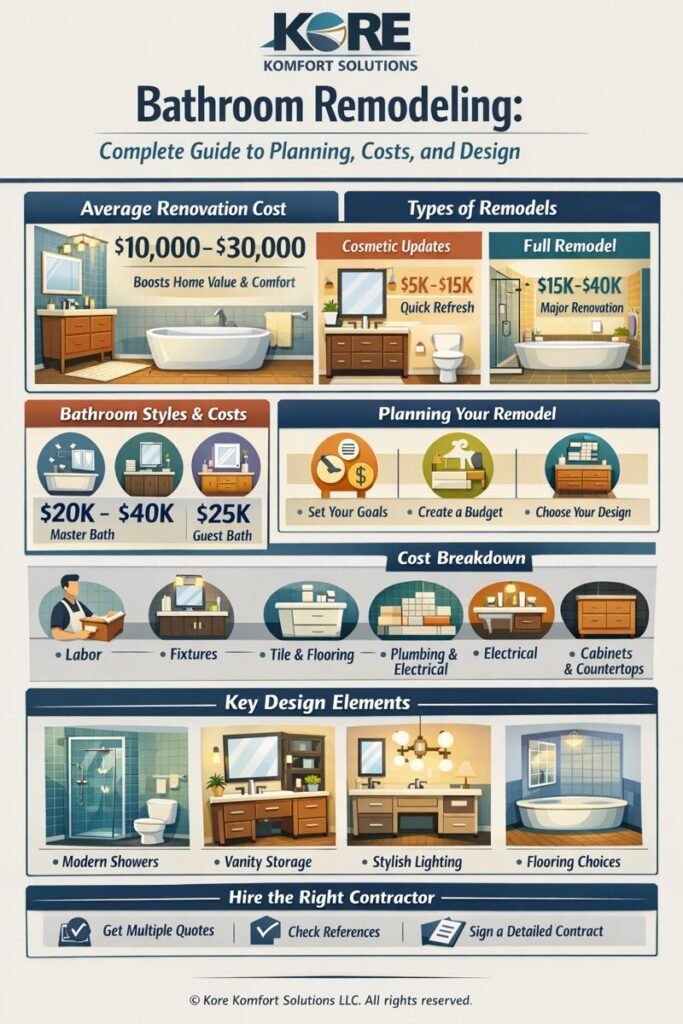
Bathroom remodeling ranks among the most popular home improvement projects. The average bathroom remodeling cost runs between $10,000 and $30,000 for complete renovations. These projects deliver both immediate functional improvements and long-term value increases. Moreover, updated spaces significantly enhance daily comfort while addressing common issues like outdated fixtures, inadequate storage, and poor layouts.
This comprehensive guide explores everything you need to know about bathroom remodeling costs along with how to design and plan the perfect project. We’ll examine different project types, typical costs, design considerations, and practical planning strategies. Whether you’re updating a powder room or creating a luxury master bath, this guide provides the information needed to plan and execute successful renovations.
Understanding Bathroom Remodeling Scope
These projects vary dramatically in scope, complexity, and cost. Understanding these differences helps you plan appropriately and set realistic expectations for your project.
Cosmetic Updates vs. Full Remodels
Typically, cosmetic updates involve replacing visible fixtures and finishes without changing the room’s layout or moving plumbing. These projects include installing new vanities, toilets, lighting fixtures, mirrors, paint, and flooring. Cosmetic updates typically cost $5,000 to $15,000 and complete within one to two weeks.
In contrast, full remodels involve comprehensive changes including layout modifications, plumbing relocation, and structural alterations. These projects might move toilet locations, expand shower areas, relocate vanities, or even increase the footprint. Full remodels typically cost $15,000 to $40,000 or more and require four to eight weeks to complete.
Importantly, the distinction matters because layout changes trigger substantial additional costs. Moving a toilet requires rerouting drain lines through floors or walls, often costing $1,000 to $3,000 just for plumbing modifications. Similarly, relocating showers or tubs involves extensive plumbing work plus waterproofing and tiling expenses.
Bathroom Types and Their Unique Considerations
Notably, master bathrooms represent the largest investment category. These spaces typically include double vanities, separate tubs and showers, and generous square footage. Master bath remodels often cost $20,000 to $40,000 due to their size and the quality of finishes homeowners select for their primary bathroom.
Meanwhile, guest bathrooms require balancing quality with budget constraints. These spaces need durable, attractive finishes but don’t necessarily justify the premium materials homeowners choose for master suites. Guest bath remodels typically cost $12,000 to $25,000 depending on size and scope.
Additionally, powder rooms offer opportunities for dramatic impact in small spaces. Without shower or tub considerations, these projects focus on statement vanities, distinctive lighting, and bold design choices. Powder room updates typically cost $5,000 to $15,000.
Half baths and three-quarter baths fall between powder rooms and full bathrooms in complexity. Their limited fixtures reduce costs compared to full baths, while their functional requirements exceed those of powder rooms. These remodels typically cost $8,000 to $18,000.
Planning Your Bathroom Remodel
Successful remodeling begins with thorough planning. The planning phase determines whether your project stays on budget and delivers results that meet your expectations.
Defining Your Goals and Priorities
Initially, start by identifying specific problems your remodel should solve. Are you addressing inadequate storage, poor lighting, outdated fixtures, or insufficient counter space? Perhaps you need better accessibility features or want to eliminate a cramped shower. Clearly defined problems guide design decisions and help prioritize spending.
Furthermore, consider who uses the bathroom and how usage patterns should influence design. Master bathrooms serving two people benefit from double vanities and separate toilet enclosures. Family bathrooms need durable finishes that withstand heavy use and easy-to-clean surfaces. Guest bathrooms should accommodate visitors comfortably while remaining simple to maintain.
Additionally, think about your timeline for staying in your home. If you’re planning to sell within two years, focus on updates that appeal to broad buyer preferences and offer strong resale returns. Conversely, if you’re staying long-term, prioritize features that improve your daily experience, even if they offer limited resale value.
Finally, create a list of must-haves versus nice-to-haves. Must-haves include non-negotiable elements like replacing a cracked tub or adding essential storage. Nice-to-haves encompass desirable features like heated floors or premium fixtures that you’ll include if budget permits.
Establishing a Realistic Budget
Budget planning requires understanding both what you can afford and what bathroom remodels typically cost in your area. Start by examining your available funds, financing options, and monthly cash flow to determine a realistic total budget.
As a general guideline, plan to spend 5% to 10% of your home’s value on a master bathroom remodel. For a $300,000 home, this suggests a $15,000 to $30,000 budget. Spending significantly more risks over-improving relative to your neighborhood, making it difficult to recoup costs if you sell.
Always include a contingency fund of 15% to 20% of your project budget for unexpected issues. Bathroom remodels frequently reveal hidden problems like water damage, mold, outdated plumbing that doesn’t meet current codes, or structural issues requiring correction. For example, a $20,000 bathroom budget should include $3,000 to $4,000 for contingencies.
Moreover, research typical bathroom remodeling costs in your area before finalizing budgets. Regional variations can be substantial, with identical projects costing 30% to 50% more in high-cost markets compared to lower-cost areas. Local contractor quotes provide the most accurate pricing information for your specific market.
Layout and Design Considerations
Room layouts significantly impact both functionality and cost. Keeping existing plumbing locations minimizes expenses, as moving fixtures requires rerouting water supply lines and drain pipes. However, layout changes often deliver the most dramatic improvements in functionality.
Standard layouts include:
Single-wall layouts place all fixtures along one wall. These work well for small bathrooms and powder rooms where space efficiency is paramount. Single-wall layouts minimize plumbing costs but offer limited counter space and storage.
Galley layouts position fixtures along two parallel walls. These efficiently use narrow spaces and create logical work zones. Galley layouts work well for hall bathrooms and three-quarter baths.
L-shaped layouts arrange fixtures along two adjacent walls. This configuration provides good separation between the toilet and bathing areas while maintaining efficient plumbing routing. L-shaped layouts suit medium-sized bathrooms.
Open layouts feature freestanding tubs, separate shower enclosures, and distinct zones for different functions. These require larger square footage but deliver the most luxurious feel. Open layouts characterize high-end master bathrooms.
When planning layouts, maintain adequate clearances. Toilets need at least 30 inches of width and 21 inches of front clearance. Showers should measure at least 36 inches square for comfortable use. Vanities require 30 inches of width per user, with 36 to 48 inches preferred for comfortable grooming.
Bathroom Remodeling Costs
Understanding typical bathroom remodeling costs helps you budget appropriately and make informed decisions about where to allocate resources.
Cost Breakdown by Category
Bathroom remodeling costs typically distribute across several categories:
Labor represents 40% to 50% of total costs for most bathroom remodels. This includes demolition, plumbing, electrical work, tile installation, carpentry, and finishing work. Labor costs vary significantly by region and project complexity.
Meanwhile, fixtures and fittings account for 15% to 25% of budgets. This category includes toilets, vanities, sinks, faucets, showerheads, tub fixtures, and accessories. Fixture costs range dramatically based on quality and style preferences.
Tile and flooring typically consume 10% to 15% of budgets. This encompasses both materials and installation for floor tile, shower tile, and any wall tile. Material choices dramatically affect costs, with basic ceramic tile costing $2 to $8 per square foot while natural stone might cost $15 to $50 per square foot.
Plumbing and electrical represent 15% to 20% of costs when relocating fixtures or upgrading systems. Simple fixture replacements cost less, while moving drain lines or upgrading electrical panels increases expenses substantially.
Cabinetry and countertops account for 10% to 15% of budgets. Stock vanities cost $300 to $1,500, while custom cabinetry can exceed $5,000. Countertop materials range from $30 per square foot for laminate to $200+ per square foot for premium stone.
Shower and tub enclosures consume 10% to 20% of budgets for projects involving these elements. Prefabricated tub-shower units cost $500 to $2,000, while custom tile showers with frameless glass enclosures can exceed $8,000.
Budget Categories for Different Project Scopes
Basic updates costing $5,000 to $12,000 typically include new toilets, basic vanities, builder-grade faucets, vinyl flooring, and fresh paint. These updates use stock materials and maintain existing layouts. Basic updates suit rental properties, guest bathrooms, or situations requiring functional improvements without premium finishes.
Mid-range bathroom remodels costing $12,000 to $25,000 feature quality fixtures, semi-custom vanities, ceramic or porcelain tile floors and showers, updated lighting, and possibly minor layout changes. Mid-range remodels balance quality with value, providing durable, attractive results without premium price tags. These projects suit most family bathrooms and many master bathrooms.
High-end renovations costing $25,000 to $50,000+ include premium fixtures, custom cabinetry, natural stone tile, frameless glass shower enclosures, soaking tubs, heated floors, and high-end finishes throughout. Luxury remodels might expand bathroom footprints, add steam showers, or incorporate spa-like amenities. These projects typically focus on master bathrooms in higher-value homes.
Cost Factors That Increase Budgets
Additionally, several factors can substantially increase bathroom remodeling costs beyond baseline estimates:
Structural changes like removing walls, expanding bathrooms, or adding windows require engineering, permits, and extensive construction work. These modifications can add $5,000 to $15,000 or more to project costs.
Plumbing relocations involve rerouting water supply and drain lines through walls, floors, or ceilings. Moving a toilet costs $1,000 to $3,000, while relocating entire shower assemblies might cost $2,000 to $5,000 in plumbing work alone.
Accessibility modifications including curbless showers, wider doorways, grab bars, and comfort-height toilets add specialized materials and labor. Comprehensive accessibility remodels can increase costs by 20% to 40% compared to standard projects.
Premium materials like natural stone tile, high-end fixtures, custom cabinetry, and luxury lighting can double or triple material costs compared to standard selections. However, premium materials often provide superior durability and aesthetics that justify their costs for homeowners prioritizing quality.
Unexpected issues discovered during demolition frequently add costs. Water damage requiring structural repairs, mold remediation, outdated electrical systems needing upgrades, and code violations requiring correction can each add thousands to project budgets. This explains why adequate contingency funds are essential.
Key Design Elements
Several critical design elements determine both the functionality and aesthetic success of bathroom remodels.
Don’t get ripped off. See real pricing for bathrooms, kitchens, and HVAC.
Updated for 2026 Market Rates
Shower and Tub Considerations
Recently, modern shower design has shifted dramatically toward larger, more luxurious enclosures. Walk-in showers with dimensions of 48 inches by 60 inches or larger have replaced compact 36-inch square stalls as the preferred choice for master bathrooms. These spacious showers accommodate multiple showerheads, built-in benches, and generous movement space.
Furthermore, frameless glass enclosures create open, contemporary looks while making spaces feel larger. These enclosures cost $1,500 to $4,000 installed but deliver clean aesthetics and easier maintenance compared to framed alternatives. The investment typically proves worthwhile for master bathrooms and higher-end remodels.
Curbless showers eliminate the traditional threshold, creating seamless transitions from floors. These designs improve accessibility and create sleek, modern appearances. However, curbless showers require precise floor sloping and waterproofing, adding $1,000 to $3,000 to installation costs compared to traditional curbed showers.
Bathtub decisions depend on space, budget, and household needs. Freestanding soaking tubs create luxurious focal points but cost $1,500 to $5,000+ for quality options. Built-in alcove tubs cost less ($400 to $1,500) but offer less visual drama. Many homeowners eliminate tubs entirely from master bathrooms to maximize shower space, though homes should typically maintain at least one tub for resale value.
Vanity and Storage Solutions
Importantly, vanity selection dramatically impacts functionality and aesthetics. Double vanities measuring 60 to 72 inches wide work well for master bathrooms serving two people, providing personal space and adequate storage. Single vanities in 24 to 48-inch widths suit smaller bathrooms and powder rooms.
Floating vanities mount to walls without legs, creating contemporary looks while simplifying floor cleaning. These designs work particularly well in modern and transitional bathrooms. However, floating vanities provide less storage than floor-mounted options and require solid backing in walls for proper support.
Vanity height has evolved from traditional 30 to 32 inches to contemporary comfort height of 34 to 36 inches. Taller vanities reduce bending and accommodate vessel sinks more appropriately. Consider the primary users’ heights when selecting vanity dimensions.
Storage planning should extend beyond vanity cabinets. Recessed medicine cabinets, linen closets, wall niches in showers, and vanity drawers with organizational inserts all contribute to functionality. Plan storage for towels, toiletries, cleaning supplies, and personal items during the design phase rather than addressing storage deficits after completion.
Lighting Design
Lighting requires layered approaches combining ambient, task, and accent lighting. Ambient lighting provides overall illumination, task lighting supports specific activities like grooming, and accent lighting highlights architectural features or creates atmosphere.
Vanity lighting critically affects functionality for grooming tasks. Side-mounted sconces flanking mirrors at face height provide the most flattering, shadow-free illumination. Single fixtures mounted above mirrors create shadows and less effective task lighting. Plan for sconces positioned 65 to 70 inches above finished floors, spaced 28 to 36 inches apart for optimal results.
Shower and tub areas need dedicated lighting rated for wet locations. Recessed LED fixtures provide clean, contemporary looks while delivering adequate illumination. Plan for at least one light fixture over tubs and one or two in showers depending on size.
Dimmer controls add versatility, allowing bright lighting for grooming while creating relaxing ambiance for baths. LED-compatible dimmers work with modern efficient lighting while providing smooth dimming across the full range.
Natural light enhances bathrooms when privacy permits. Windows, skylights, and solar tubes bring daylight into bathrooms. However, window placement requires balancing natural light benefits with privacy needs. Obscured glass, window treatments, or strategic placement addresses privacy while maintaining daylight access.
Flooring and Tile Selections
Flooring choices significantly impact aesthetics, comfort, and maintenance. Tile remains the most popular flooring due to its water resistance, durability, and design versatility.
Porcelain and ceramic tile dominate floors. Porcelain offers superior water resistance and durability, making it ideal for high-use bathrooms. Ceramic tile costs less but remains suitable for most residential applications. Both materials offer extensive design options at $3 to $15 per square foot for materials.
Large-format tiles (12 inches by 24 inches or larger) create contemporary looks with fewer grout lines requiring maintenance. However, these tiles require flatter substrates and more precise installation than smaller tiles. Small mosaic tiles (1 inch to 2 inches) provide excellent traction and work well for shower floors and accent areas.
Natural stone tiles including marble, travertine, and slate deliver distinctive character and luxury aesthetics. However, stone requires sealing and more careful maintenance than porcelain. Stone costs $8 to $50+ per square foot, with installation adding $8 to $20 per square foot.
Luxury vinyl plank (LVP) has emerged as a tile alternative offering wood aesthetics with superior water resistance. Quality LVP costs $3 to $8 per square foot and installs more quickly than tile. LVP works well for floors, though it lacks tile’s premium feel and long-term durability.
Heated floors add comfort in cold climates. Electric radiant heating systems cost $8 to $15 per square foot installed and operate for minimal ongoing costs. These systems install beneath tile or stone floors, providing gentle warmth that enhances comfort during winter months.
Ventilation and Moisture Control
Proper ventilation stands as the single most critical factor for long-term bathroom health. Inadequate ventilation leads to mold growth, paint peeling, and premature deterioration of materials and fixtures.
Exhaust fans should provide at least 1 cubic foot per minute (CFM) of airflow per square foot of bathroom space. For example, a 50-square-foot bathroom needs a minimum 50 CFM fan. Bathrooms with enclosed toilets or large showers benefit from higher capacity fans (80 to 110 CFM).
Modern exhaust fans incorporate features beyond basic ventilation. Humidity sensors automatically activate fans when moisture levels rise, ensuring ventilation operates when needed without requiring manual switches. Built-in lighting combines necessary lighting with ventilation. Heaters add warmth during cold weather while exhausting moisture.
Exhaust fans should vent directly outside, never into attics or crawl spaces. Venting moisture into building cavities creates ideal conditions for mold growth and structural damage. Use smooth metal ductwork with minimal bends to maximize airflow efficiency.
Consider running exhaust fans for 20 to 30 minutes after showers or baths. Timer switches automate this process, ensuring adequate moisture removal without requiring occupants to remember to turn fans off manually.
Working with Contractors
Contractor selection significantly impacts project success. Investing time in thorough vetting pays dividends through quality work and stress reduction.
Finding and Evaluating Bathroom Remodeling Contractors
Initially, start contractor searches by gathering recommendations from friends, neighbors, and family who’ve completed similar projects. Personal referrals from trusted sources provide valuable insights into contractors’ reliability, communication, and work quality.
Additionally, online reviews supplement personal recommendations but require careful evaluation. Look for patterns across multiple reviews rather than focusing on individual experiences. Contractors with consistent feedback about specific strengths or weaknesses reveal more than scattered reviews.
Verify contractors hold appropriate licenses and insurance. Licensing requirements vary by state and municipality, so confirm local requirements. At minimum, contractors should carry general liability insurance and workers’ compensation coverage. Request certificates of insurance and verify coverage directly with insurance companies.
Check references from recent projects similar to yours. Ask references about timeline adherence, budget management, communication quality, how contractors handled problems, and whether they would hire them again. If possible, view completed projects to assess work quality directly.
Getting Accurate Bids
Hire the Right Contractor the First Time
Use our free research guide and intelligence report to vet any contractor before you sign a contract.
Typically, obtain at least three bids for bathroom remodeling projects. Multiple bids provide market pricing information while revealing how different contractors approach your project.
Provide identical information to all bidding contractors. Share the same scope descriptions, any drawings or plans, material preferences, and timeline expectations. Inconsistent information leads to bids that aren’t truly comparable.
Generally, quality bids include detailed breakdowns of labor and material costs, specific material specifications, project timelines, payment schedules, and warranty information. Be wary of bids providing only lump-sum totals without detail, as these make comparing value difficult.
Don’t automatically accept the lowest bid. Extremely low bids may indicate contractors who misunderstand project scope, plan to use inferior materials, or intend to cut corners. Focus on value—the relationship between cost and quality—rather than price alone.
Ask contractors to explain significant price differences between their bids and competitors. Legitimate reasons include higher-quality materials, more experienced crews, superior warranty coverage, or more thorough site protection. If contractors can’t explain price differences, their bids may lack proper project understanding.
Contract Essentials
Importantly, comprehensive written contracts protect both homeowners and contractors. Never begin work based on verbal agreements or informal understandings that lack documentation.
Remodeling contracts should include complete project descriptions specifying materials, fixtures, finishes, and installation methods. Include brand names, model numbers, colors, and other identifying information for all major items. Vague descriptions like “install quality tile” invite disputes about what “quality” means.
Detailed timelines with start and completion dates help manage expectations. Include provisions for weather delays or material availability issues that might extend timelines through no fault of contractors.
Payment schedules should align with work completion rather than calendar dates. Typical schedules include 10% to 20% deposits, 30% to 40% at midpoint milestones, and final payments after completion. Never pay more than 50% of total costs before work reaches midpoint stages, and withhold 10% to 15% until you’ve verified all work is complete and satisfactory.
Change order procedures specify how to handle modifications during projects. Changes should require written documentation including scope descriptions, cost impacts, and timeline effects. Verbal change orders invite disputes about what was agreed upon.
Warranty information covering both labor and materials protects against defects. Standard warranties cover labor for one year and defer to manufacturers’ warranties for materials. Quality contractors stand behind their work and address issues promptly.
Managing the Remodeling Process
Establish regular communication schedules with contractors. Daily check-ins work well for projects requiring frequent decisions, while weekly updates suit straightforward remodels. Consistent communication prevents misunderstandings and keeps projects on track.
Make material and design decisions promptly when contractors need input. Delays in selecting tile, fixtures, or other elements can halt progress and extend timelines. If you struggle with decisions, review options in advance and prepare selections before contractors need them.
Document projects through photos at each stage. Before photos establish baseline conditions, progress photos track work quality, and completion photos provide records of finished work. Documentation proves valuable if disputes arise or you need records for insurance or future sales.
Expect some disruption and inconvenience during bathroom remodels. Dust, noise, workers in your home, and facility loss create stress. However, managing expectations and maintaining perspective helps you cope with temporary inconveniences while anticipating improved results.
Address concerns immediately rather than allowing problems to accumulate. Minor issues caught early are easily corrected, while problems ignored until completion become expensive to fix. Good contractors appreciate prompt feedback that helps them deliver results meeting your expectations.
Return on Investment
Understanding the financial returns bathroom remodeling generates helps prioritize improvements and set appropriate budgets.
Typical ROI for Bathroom Remodels
These projects typically recoup 55% to 70% of their cost when homeowners sell within a few years of completion. Mid-range bathroom remodels generally return higher percentages (60% to 70%) than luxury renovations (50% to 60%), as buyers often don’t pay premiums for high-end finishes.
These averages mask significant regional variations. Strong housing markets with high demand typically generate better returns than markets with flat or declining prices. Additionally, bathrooms in move-in ready condition provide value beyond pure financial returns by attracting more buyers and potentially reducing time on market.
The primary value most homeowners receive from bathroom remodeling comes from improved functionality and daily enjoyment rather than purely financial returns. Updated bathrooms eliminate frustrations from outdated fixtures, inadequate storage, or poor layouts. These quality-of-life improvements justify investments even when financial returns fall below 100%.
Maximizing Resale Value
Certain improvements deliver stronger resale returns than others. Specifically, focus on these elements when remodeling spaces in homes you plan to sell within several years:
Modern fixtures in neutral styles appeal to broad buyer preferences. Avoid highly distinctive or trendy fixtures that might not match buyers’ tastes. Classic chrome or brushed nickel finishes outperform unique colored finishes in resale situations.
Quality tile in timeless patterns provides lasting appeal. Large-format neutral tiles, classic subway tiles, and subtle natural stone create attractive bathrooms without overwhelming buyers with bold design statements. Save distinctive tile choices for accent walls rather than using them throughout.
Adequate storage ranks among buyers’ top priorities. Double vanities in master bathrooms, medicine cabinets, linen storage, and organizational features add functional value buyers appreciate.
Proper lighting combining ambient and task illumination creates functional, attractive spaces. Dated lighting fixtures significantly age bathrooms, while updated lighting provides cost-effective impact.
Good ventilation prevents moisture issues that concern buyers. Modern, quiet exhaust fans with adequate capacity reassure buyers that bathrooms won’t develop mold or moisture problems.
Avoid over-improving bathrooms relative to your neighborhood. Installing $8,000 worth of marble tile in a $150,000 home represents over-improvement that won’t return its cost. Match quality and finishes to neighborhood norms for optimal returns.
Common Bathroom Remodeling Mistakes
Learning from common mistakes helps you avoid expensive problems and disappointment with results.
Inadequate Planning and Research
Rushing into bathroom remodeling without thorough planning causes most project failures. Homeowners who skip planning phases, fail to research costs, or underestimate complexity find themselves with budget overruns, extended timelines, or results that don’t meet needs.
Invest adequate time in planning before starting work. For bathroom remodels, spend four to eight weeks planning, gathering bids, selecting materials, and making design decisions. This preparation time prevents hasty decisions made under pressure during construction.
Insufficient Budgets and No Contingency Funds
Underestimating bathroom remodeling costs leads to stressful mid-project budget crises. Homeowners who set unrealistic budgets based on wishful thinking rather than market research find themselves unable to complete projects as planned or forced to accept inferior solutions due to funding shortfalls.
Research actual bathroom remodeling costs in your market before setting budgets. Obtain multiple contractor bids even if you plan to handle work yourself, as these bids provide realistic cost baselines. Add 20% contingency funds for unexpected issues, as bathroom remodels frequently reveal hidden problems requiring correction.
Poor Ventilation Planning
Inadequate ventilation represents the most common design mistake with the most serious long-term consequences. Bathrooms without proper ventilation develop mold, mildew, paint deterioration, and premature fixture corrosion. These problems cost thousands to correct and create unhealthy indoor environments.
Prioritize ventilation during bathroom remodeling. Install exhaust fans with adequate capacity vented directly outside. Consider humidity-sensing fans that operate automatically. Never skimp on ventilation to save a few hundred dollars, as the long-term costs of inadequate ventilation far exceed installation savings.
Ignoring Storage Needs
Failing to plan adequate storage during bathroom remodeling creates ongoing frustration. Homeowners who focus solely on aesthetics while neglecting practical storage needs find themselves with beautiful spaces that don’t function well for daily use.
Assess storage requirements during planning phases. Consider where you’ll keep towels, toiletries, cleaning supplies, toilet paper, and personal items. Plan storage solutions including vanity drawers, medicine cabinets, linen closets, and built-in niches before finalizing designs.
Trendy Design Choices
Following design trends too closely creates spaces that quickly feel dated. Color schemes, tile patterns, or fixture styles that feel current today may appear tired within five years. Homeowners who prioritize trendiness over timeless design find themselves wanting to remodel again sooner than necessary.
Choose classic designs for permanent elements like tile, vanities, and layouts. Save trendy expressions for easily changed elements like paint colors, accessories, and lighting fixtures. Neutral tile, simple cabinetry styles, and classic fixture finishes maintain appeal across decades while trendy choices age quickly.
DIY Projects Beyond Skill Levels
Attempting DIY remodeling beyond your skill level leads to poor results, costly corrections, and potential safety hazards. Plumbing and electrical work require specialized knowledge and typically need permits and inspections. Amateur work on these systems can create code violations, safety hazards, and expensive problems when improper work fails.
Be realistic about DIY capabilities. Demolition, painting, and possibly tile work can be DIY-friendly for skilled homeowners. However, plumbing beyond simple fixture replacement, electrical work, and complex tile installations generally require professional expertise. Hiring professionals for specialized work while handling appropriate tasks yourself optimizes both quality and costs.
Accessibility and Universal Design
Planning spaces with accessibility in mind benefits current needs while providing flexibility for future requirements.
Universal Design Principles
Universal design creates spaces usable by people of all ages and abilities without requiring specialized adaptations. These principles benefit everyone while specifically accommodating those with mobility limitations.
Curbless showers eliminate thresholds that create barriers for wheelchair users and trip hazards for everyone. These showers cost 15% to 30% more than traditional curbed showers but provide safer, more accessible bathing facilities.
Comfort-height toilets measure 17 to 19 inches tall compared to standard 15-inch heights. The extra height reduces stress on knees and hips while making standing easier. These toilets cost approximately the same as standard heights but deliver improved comfort for most users.
Wide doorways measuring 34 to 36 inches accommodate wheelchairs and walkers while feeling more spacious for all users. Planning adequate door widths during remodeling costs little extra but provides significant accessibility benefits.
Grab bars provide stability and support when installed near toilets and in showers. Modern grab bars come in attractive finishes that complement aesthetics rather than appearing institutional. Install backing during remodeling to accommodate future grab bar installation even if you don’t install bars immediately.
Adjustable showerheads on slide bars accommodate users of different heights and abilities. Hand-held showerheads provide flexibility for various needs including seated showering, pet bathing, and cleaning.
Lever handles on faucets and doors operate more easily than knobs for people with arthritis or limited hand strength. These handles cost approximately the same as knobs but provide better accessibility.
Planning for Aging in Place
Spaces designed for aging in place allow homeowners to remain in their homes as mobility decreases with age. Planning these features during remodeling costs far less than retrofitting later.
Walk-in tubs feature doors allowing entry without stepping over high tub sides. These specialized tubs cost $3,000 to $8,000 plus installation but provide safe bathing for those who can’t step into traditional tubs. However, users must wait for tubs to drain before exiting, which some find inconvenient.
Shower benches provide seating for those who can’t stand during bathing. Built-in tile benches integrate seamlessly into shower designs. Alternatively, reinforced backing allows future installation of wall-mounted fold-down seats when needed.
Non-slip flooring prevents falls, which represent major concerns for older adults. Textured tile, smaller tiles with more grout lines, and slip-resistant finishes reduce fall risks. Avoid highly polished stone or large-format polished tiles in floors.
Adequate lighting becomes increasingly important as vision changes with age. Plan for bright, shadow-free illumination throughout bathrooms. Night-lights or motion-activated lighting helps prevent falls during nighttime visits.
Timeline and Project Management
Understanding realistic timelines helps manage expectations and plan around remodeling disruption.
Typical Project Timelines
Small bathroom remodels maintaining existing layouts typically require two to four weeks from start to completion. These projects include fixture replacement, new tile, vanity installation, and cosmetic updates without moving plumbing or making structural changes.
Medium bathroom remodels involving layout changes, plumbing relocation, or expanding bathroom footprints typically take four to six weeks. Additional time accommodates the complexity of moving fixtures, rerouting plumbing, and potentially addressing structural modifications.
Large bathroom remodels creating luxury master suites with extensive custom work often require six to eight weeks or longer. Custom cabinetry lead times, complex tile work, and comprehensive scope contribute to extended timelines.
Additionally, several factors can extend bathroom remodeling timelines beyond initial estimates. Custom materials might require six to twelve weeks for manufacturing and delivery. Permit approval processes add days to weeks depending on jurisdictions. Unexpected issues like water damage, structural problems, or code violations require additional time for proper correction.
Living Without Your Bathroom
Plan how you’ll manage daily routines during bathroom remodeling. If remodeling your only full bathroom, the disruption significantly impacts daily life. Consider these options:
Using alternative bathrooms in your home provides the simplest solution when available. Temporarily sharing other bathrooms or using powder rooms minimizes disruption.
Installing temporary facilities including camping showers or portable units allows you to remain in your home during extended projects. These solutions lack comfort but provide functionality.
Relocating temporarily to family, friends, or short-term rentals makes sense for extensive master bathroom remodels when you have only one full bathroom. The cost of temporary housing often proves worthwhile for maintaining sanity during major renovations.
Communicate clearly with contractors about their daily schedules so you can plan accordingly. Understanding when workers arrive, take breaks, and leave helps you coordinate access during active work periods.
Frequently Asked Questions
How long does a typical bathroom remodel take from start to finish?
Bathroom remodels typically take two to four weeks for straightforward projects maintaining existing layouts and fixtures locations. Projects involving layout changes, plumbing relocation, or custom materials often require four to six weeks. Luxury master bathroom remodels with extensive custom work can take six to eight weeks or longer.
Factors affecting timelines include material availability, permit approval processes, and unexpected issues discovered during demolition. To manage expectations, plan for projects to take about 20% longer than contractor estimates. Avoid scheduling bathroom remodels immediately before events requiring access or when you’ll be unavailable to make decisions contractors need.
Can I remodel a bathroom for under $10,000?
Bathroom remodels under $10,000 are possible for small projects when maintaining existing layouts, using stock materials, and handling some work yourself. This budget typically accommodates new toilets, basic stock vanities, vinyl flooring, standard ceramic tile for showers, and builder-grade fixtures. However, $10,000 budgets require careful material selection and might not cover layout changes, high-end finishes, or extensive plumbing modifications.
Small powder rooms or half-baths fit $10,000 budgets more readily than full bathrooms. DIY work on appropriate tasks like demolition, painting, and possibly tile installation can stretch budgets further. Nevertheless, most full bathroom remodels with professional labor cost $12,000 to $25,000 for mid-range finishes and quality.
Should I move the toilet to a better location during my remodel?
Moving toilets provides opportunities to improve layouts and functionality, but this decision requires weighing benefits against substantial costs. Relocating toilets costs $1,000 to $3,000 for plumbing work alone, as drain lines must route through floors or walls to new locations. Moving toilets onto exterior walls or onto second floors increases complexity and costs.
Consider toilet relocation when current placement severely compromises bathroom function, such as toilets positioned immediately inside entry doors or blocking logical vanity placement. However, if existing toilet locations work reasonably well, the thousands spent on relocation might better apply to higher-quality finishes or fixtures. Consult with your contractor about layout options and associated costs before deciding.
What are the most important things to splurge on in a bathroom remodel?
Prioritize spending on elements affecting long-term functionality and durability rather than purely aesthetic features. Quality plumbing fixtures including shower valves, faucets, and toilet mechanisms justify higher costs through superior reliability and fewer repairs. Adequate ventilation prevents moisture damage, mold, and premature deterioration, making proper exhaust fans worthwhile investments.
Quality tile and professional installation ensure waterproofing and durability for decades. Proper lighting including task lighting at vanities significantly impacts daily functionality. Conversely, consider budget options for easily changed elements like paint colors, mirrors, and accessories. You can always upgrade these decorative elements later, while replacing poor-quality infrastructure or fixtures proves expensive and disruptive once bathrooms are complete.
How do I prevent mold and moisture problems in my remodeled bathroom?
Preventing moisture problems requires combining proper ventilation, appropriate materials, and correct installation techniques. Install exhaust fans providing at least 1 CFM per square foot of bathroom space, ensuring fans vent directly outside rather than into attics or crawl spaces. Run fans for 20 to 30 minutes after showers or baths, using timer switches or humidity sensors to automate operation.
Use proper waterproofing membranes and techniques in showers and around tubs, as water infiltration behind tile causes most moisture problems. Select mold-resistant drywall and paint for bathroom walls and ceilings. Ensure adequate space heating to prevent condensation on cold surfaces. Fix plumbing leaks promptly rather than allowing water damage to develop. Regular cleaning and maintenance prevent mold establishment in grout, caulk, and other susceptible areas.
Related Resources
- Home Remodeling Guide
- Bathroom Remodeling Calculator
- Ohio Bathroom Remodeling
- What Does It Cost to Remodel an 8×5 Bathroom in Southern Ohio?
- Bathroom Remodeling in Ashland, KY
- Bathroom Remodeling in Chillicothe, OH
- Bathroom Remodeling in Waverly, OH
- Bathroom Remodeling in Portsmouth, OH
This comprehensive guide provides general information about bathroom remodeling planning and execution. For specific guidance about bathroom remodeling projects in your area, including detailed cost estimates, local contractor recommendations, and region-specific considerations, explore our location-based bathroom remodeling guides.
Schedule Your Free Estimate For Your Bathroom Remodel
Hire the Right Contractor the First Time
Use our free research guide and intelligence report to vet any contractor before you sign a contract.