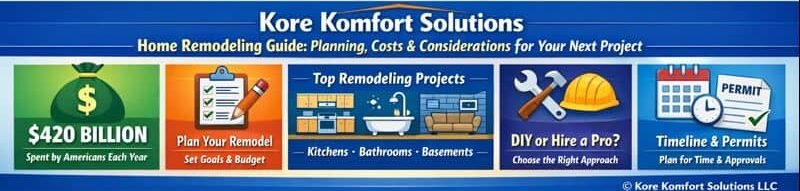
Home remodeling represents one of the most significant investments homeowners make. Americans spend over $420 billion annually on residential improvements and repairs. Whether you’re updating a single room or undertaking a whole-house transformation, understanding the remodeling process is essential. This knowledge helps you make informed decisions that maximize both your investment and your satisfaction with the results.
This comprehensive guide explores the essential aspects of home remodeling, from initial planning and budgeting through project execution and completion. We’ll examine the most popular remodeling projects, their typical costs and timelines, and the critical factors that determine whether your project succeeds or falls short of expectations.
Understanding Home Remodeling vs. Renovation
Many homeowners use the terms “remodeling” and “renovation” interchangeably, but understanding the distinction helps you communicate effectively with contractors and set appropriate expectations for your project.
Renovation typically involves restoring or updating existing structures without changing their fundamental purpose or layout. For example, when you refinish hardwood floors, replace kitchen cabinets with new ones in the same configuration, or update bathroom fixtures, you’re renovating. These projects refresh and modernize spaces while maintaining their original design and function.
In contrast, remodeling involves changing the structure, layout, or purpose of a space. Moving walls to create an open-concept kitchen, converting a bedroom into a home office, or adding a bathroom where none existed represents remodeling. These projects fundamentally transform how spaces look and function.
The distinction matters because remodeling projects generally require more extensive planning, additional permits, and higher costs than renovations. Additionally, they typically involve longer timelines. For instance, a kitchen renovation might take two to three weeks and cost $25,000. However, a kitchen remodel involving layout changes could take six to eight weeks and cost $50,000 or more.
Most Popular Home Remodeling Projects
Certain remodeling projects consistently deliver strong returns on investment while significantly improving daily living quality. Understanding these popular projects helps homeowners prioritize improvements that offer the best combination of functionality, enjoyment, and financial return.
Kitchen Remodeling
Kitchen remodeling remains the most popular home improvement project. Consequently, homeowners spend an average of $35,000 to $75,000 on major kitchen renovations. The kitchen serves as the functional heart of most homes. Therefore, outdated or inefficient kitchens create daily frustration while potentially reducing home value.
Modern kitchen remodels typically focus on improving workflow and increasing storage. Additionally, they prioritize updating appliances for energy efficiency and creating spaces that accommodate both cooking and socializing. Popular elements include large islands with seating, professional-grade appliances, custom cabinetry with organizational features, and durable countertop materials like quartz or granite.
The scope of kitchen remodeling varies dramatically. Minor updates involving new countertops, cabinet refacing, and updated appliances might cost $15,000 to $25,000. Meanwhile, mid-range remodels with new cabinets, countertops, flooring, and appliances typically run $35,000 to $65,000. In contrast, high-end kitchen remodels featuring custom cabinetry, premium appliances, and structural changes can exceed $100,000.
Kitchen remodeling projects generally recoup 50% to 70% of their cost at resale. Typically, minor updates return a higher percentage than major overhauls. However, the real value lies in the daily enjoyment and improved functionality these spaces provide to homeowners who use them multiple times every day.
Bathroom Remodeling
Bathroom remodeling ranks second in popularity among home improvement projects. Homeowners invest between $10,000 and $30,000 on average for complete bathroom renovations. Bathrooms endure heavy daily use, consequently making them prone to wear, water damage, and outdated fixtures that reduce both functionality and aesthetic appeal.
Bathroom remodels range from simple cosmetic updates to complete transformations involving plumbing relocation, expanded footprints, and luxury amenities. Furthermore, common improvements include walk-in showers with frameless glass enclosures, freestanding soaking tubs, dual vanities, heated flooring, and improved ventilation systems.
Master bathroom remodels typically cost more than secondary bathrooms due to larger spaces and more luxurious finishes. For instance, a basic bathroom refresh with new fixtures, flooring, and paint might cost $5,000 to $10,000. Meanwhile, mid-range bathroom remodels typically run $15,000 to $25,000. In contrast, high-end master bathroom transformations can exceed $40,000, particularly when expanding the bathroom’s footprint or adding premium features.
Bathroom remodeling projects typically recoup 55% to 70% of their cost at resale. Similarly to kitchens, the primary value comes from improved daily comfort and functionality rather than purely financial returns.
Basement Finishing and Remodeling
Basement finishing transforms unused or underutilized space into functional living areas. Consequently, it effectively increases your home’s usable square footage without the expense of an addition. Finished basements can serve as family rooms, home offices, home theaters, guest suites, or recreational spaces.
The cost to finish a basement typically ranges from $30 to $75 per square foot. Therefore, a 1,000-square-foot basement might cost $30,000 to $75,000 to finish completely. This wide range reflects differences in finishes, the complexity of mechanical systems, and whether you’re creating simple storage space or luxury living areas.
Basement finishing requires addressing several unique challenges. Moisture control stands as the single most critical factor, as basements are naturally prone to dampness and potential water intrusion. Therefore, proper waterproofing, drainage, and dehumidification systems must be in place before finishing work begins. Additionally, ceiling height limitations, natural light deficits, and egress requirements for bedroom spaces also influence design decisions.
Common basement remodeling projects include creating additional bedrooms with egress windows, adding bathrooms, building wet bars or kitchenettes, installing home theaters, and designing dedicated exercise spaces. Furthermore, many homeowners also finish portions of basements while leaving utility areas accessible for maintenance.
Basement finishing typically recoups 70% to 75% of its cost at resale. Consequently, this makes it one of the better-performing remodeling investments from a purely financial perspective.
HVAC System Upgrades and Replacements
HVAC system replacement and upgrades represent essential remodeling investments that homeowners often overlook until systems fail. Fortunately, modern HVAC systems offer dramatically improved energy efficiency, better indoor air quality, more consistent temperatures, and quieter operation compared to systems over ten years old.
Complete HVAC system replacement typically costs $5,000 to $12,000 for conventional forced-air systems in average-sized homes. However, high-efficiency systems, ductless mini-split systems, and geothermal heat pumps can cost significantly more. Nevertheless, they offer lower operating costs and longer lifespans.
HVAC remodeling extends beyond simple replacement to include ductwork modifications, zoning systems for independent temperature control in different areas, upgraded thermostats with smart controls, and improved insulation to reduce heating and cooling loads. Additionally, many homeowners combine HVAC upgrades with other remodeling projects to minimize wall opening and repair costs.
Energy-efficient HVAC systems can reduce heating and cooling costs by 20% to 40% compared to older systems. Consequently, they represent one of the few remodeling investments that generates ongoing financial returns through reduced utility bills. Additionally, many high-efficiency systems qualify for federal tax credits and utility rebates that offset initial installation costs.
Whole-House Remodeling
Whole-house remodeling involves comprehensive updates throughout an entire home. Typically, this includes kitchen and bathroom remodels, new flooring throughout, updated electrical and plumbing systems, new windows and doors, and sometimes structural modifications to improve flow and functionality.
These extensive projects typically cost $100,000 to $300,000 or more, depending on the home’s size and the scope of improvements. Whole-house remodels make sense when multiple systems need updating simultaneously or when you want to comprehensively update an older home’s style. Furthermore, they’re ideal when you’re planning to stay in the home long-term and want to customize it completely to your needs.
Whole-house remodeling offers opportunities to address multiple issues simultaneously. As a result, this can potentially reduce overall costs compared to tackling projects separately over several years. Contractors can negotiate better pricing on materials when ordering for an entire house. Moreover, you avoid the duplicate mobilization costs and disruption of multiple separate projects.
These comprehensive projects require extensive planning. Often, this involves hiring architects or designers to ensure all improvements work together cohesively. Furthermore, homeowners typically need to relocate during at least portions of whole-house remodels, particularly when major systems like electrical, plumbing, or HVAC require updating throughout the home.
Planning Your Remodeling Project
Successful remodeling projects begin with thorough planning that addresses both practical considerations and personal preferences. Indeed, the planning phase determines whether your project stays on budget, meets your expectations, and delivers lasting value.
Defining Your Goals and Priorities
Start by clearly identifying what you want to accomplish with your remodeling project. Are you addressing functional problems, updating outdated aesthetics, preparing to sell your home, or creating your forever home? Importantly, your goals significantly influence appropriate budgets, design choices, and quality levels.
Create a detailed list of must-haves and nice-to-haves for your project. Must-haves represent non-negotiable elements that define project success. In contrast, nice-to-haves include desirable features you’ll include if budget permits. This prioritization helps when you inevitably face budget decisions during the project.
Consider how long you plan to stay in your home. If you’re selling within a year or two, focus on improvements that appeal to broad buyer preferences and offer strong resale returns. Conversely, if you’re staying long-term, prioritize features that improve your daily life, even if they offer limited resale value.
Think about your household’s specific needs. Families with young children have different priorities than empty nesters or those working from home. Similarly, universal design features that accommodate aging in place may be important if you plan to stay in the home through retirement.
Establishing a Realistic Budget
Budget planning represents one of the most critical planning steps. However, many homeowners approach it backwards by selecting designs first and then discovering what they cost. Instead, determine what you can afford to spend, then design within that budget.
Calculate what you can realistically afford by examining your savings, available financing, and monthly cash flow. Additionally, avoid financing remodeling projects on high-interest credit cards. Home equity lines of credit, home equity loans, cash-out refinancing, and personal loans offer better rates for qualified borrowers.
Plan to spend about 5% to 15% of your home’s value on any single remodeling project. Spending significantly more risks over-improving your home relative to your neighborhood. Consequently, this makes it difficult to recoup costs if you sell. For example, installing a $60,000 kitchen in a $200,000 home might make sense. However, the same kitchen in a $120,000 home represents over-improvement.
Always include a contingency budget of at least 15% to 20% of your project cost for unexpected issues. Indeed, remodeling older homes frequently reveals problems like outdated wiring, plumbing issues, structural damage, or code violations that must be corrected before completing your planned improvements.
Research typical costs for your type of project in your area before finalizing budgets. Notably, regional cost variations can be substantial, with the same kitchen remodel costing 40% more in high-cost markets compared to lower-cost areas.
Choosing Between DIY and Professional Help
Among the earliest decisions, one involves determining which aspects of your remodeling project you’ll handle yourself and which require professional expertise. Notably, this decision significantly impacts costs, timelines, and results.
Indeed, DIY work can dramatically reduce labor costs, which typically represent 20% to 35% of total remodeling expenses for most projects. However, DIY approaches only make financial sense when you possess the necessary skills, tools, and time to complete work correctly.
Nevertheless, certain tasks should almost always be left to professionals. Electrical work beyond simple fixture replacement requires licensed electricians in most jurisdictions. Plumbing modifications, gas line work, structural changes, and HVAC system installation all require specialized knowledge and typically need permit inspections. DIY work on these systems can create safety hazards, code violations that complicate future sales, and expensive problems when amateur work fails.
Conversely, other tasks lend themselves well to competent DIY work. Painting, simple tile work, cabinet installation (for those with woodworking experience), and demolition can be DIY-friendly for homeowners with appropriate skills and tools. Many homeowners successfully handle these tasks while hiring professionals for specialized work.
Furthermore, consider the true cost of DIY work beyond just saved labor expenses. Will you need to purchase or rent specialized tools? How much time will the work require, and what’s the opportunity cost of that time? What happens if DIY work doesn’t meet your expectations or creates problems requiring professional correction?
Ultimately, for most major remodeling projects, a hybrid approach works best: handle tasks within your skill level yourself while hiring professionals for specialized work, complex installations, and anything requiring permits.
Permits and Code Compliance
Importantly, nearly all significant remodeling work requires building permits, and working without required permits creates multiple problems. Unpermitted work can lead to fines, stop-work orders, difficulty selling your home, and homeowner’s insurance complications if unpermitted work contributes to damage or injuries.
Generally, permits typically cost between 1% and 3% of total project costs but provide important protections. Permit requirements trigger inspections that verify work meets current building codes, ensuring your remodeling project is safe and built to appropriate standards. Permitted work creates documentation that adds value when you sell, as potential buyers can verify major improvements were completed legally.
Work requiring permits typically includes:
- Structural modifications including removing or moving walls
- Electrical system modifications beyond simple fixture replacement
- Plumbing changes or additions
- HVAC system installation or modification
- Window and door replacements affecting structural openings
- Additions of any size
- Basement finishing, particularly when adding bedrooms
- Deck construction
However, permit requirements vary by jurisdiction, so check with your local building department before starting work. Some areas require permits for relatively minor work, while others have higher thresholds.
Typically, licensed contractors handle permit applications as part of their services, though homeowners can pull permits for their own work in most jurisdictions. However, pulling your own permits makes you responsible for ensuring all work meets code requirements and passes inspections.
Timeline Planning
Similarly, realistic timeline planning helps manage expectations and minimize frustration during remodeling projects. Most projects take longer than homeowners initially expect, particularly when they involve multiple trades, custom materials, or unexpected complications.
For instance, small bathroom remodels typically take two to four weeks. Kitchen remodels run four to eight weeks for standard projects and up to twelve weeks when involving structural changes or custom cabinetry. Basement finishing usually requires six to twelve weeks. Whole-house remodels can take three to six months or longer.
Moreover, several factors can extend timelines beyond initial estimates. Material availability issues can delay projects by weeks or months, particularly for custom cabinetry, specialty tile, or unique fixtures. Weather can halt exterior work and delay interior projects when materials can’t be delivered. Permit approval processes vary by jurisdiction but can add days to weeks to project starts. Unexpected issues discovered during demolition often require additional time to address properly.
Therefore, plan for projects to take 20% to 30% longer than contractor estimates, particularly for extensive remodels. If you need to move out during remodeling, build buffer time into housing arrangements to avoid the stress and expense of last-minute extensions.
Avoid scheduling major remodeling projects immediately before events like holidays, planned entertaining, or other deadline-driven commitments. The stress of deadline pressure often leads to rushed decisions or acceptance of subpar work to meet arbitrary timelines.
Selecting and Working with Contractors
For most homeowners, selecting the right contractor represents the single most important factor determining whether their remodeling project succeeds or becomes a nightmare of cost overruns, delays, and poor workmanship.
Finding Qualified Contractors
Initially, start your contractor search by gathering recommendations from friends, family, and neighbors who’ve completed similar projects. Personal referrals from people whose judgment you trust provide valuable insights into contractors’ reliability, communication style, and work quality.
Additionally, online reviews offer additional perspective but require careful evaluation. Look for patterns across multiple reviews rather than fixating on single extreme experiences. Contractors with dozens of reviews averaging 4.5 to 5 stars generally deliver reliable service. Be skeptical of contractors with only a handful of reviews or recent reviews following a long gap, as these may be manipulated.
Furthermore, verify that contractors hold appropriate licenses and insurance. Licensing requirements vary by state and municipality, so check local requirements. At minimum, contractors should carry general liability insurance and workers’ compensation coverage. Request certificates of insurance and verify coverage directly with insurance companies rather than accepting photocopied documents that may be outdated.
Finally, check contractors’ references, but recognize that contractors only provide references they expect to give positive feedback. Ask specific questions about timeline adherence, communication quality, how the contractor handled problems, and whether the reference would hire them again. If possible, ask to see completed projects similar to what you’re planning.
Getting and Comparing Bids
Obtain at least three bids for significant remodeling projects. More bids provide better market information but create diminishing returns beyond four or five contractors, as you’ll spend considerable time meeting with contractors and reviewing proposals.
Provide identical information to all bidding contractors, including detailed scope descriptions, any plans or drawings, and your expectations for materials and finishes. Inconsistent information leads to bids that aren’t truly comparable.
Quality bids should include detailed breakdowns of labor and material costs, project timelines, payment schedules, warranty information, and specifics about materials and finishes. Be wary of bids that provide only lump-sum totals without detail, as these make it difficult to compare value or understand what you’re actually getting.
The lowest bid isn’t always the best value. Extremely low bids may indicate contractors who don’t understand project scope, plan to use subpar materials, or intend to cut corners on quality. Conversely, the highest bid doesn’t guarantee the best work. Focus on comparing value—the relationship between cost and quality—rather than price alone.
Ask contractors to explain significant price differences between their bids and competitors. Legitimate reasons include higher-quality materials, more experienced labor, superior warranty coverage, or more thorough site protection and cleanup. If contractors can’t explain price differences, their bids may be based on incomplete understanding of project requirements.
Contract Essentials
Never begin work without a detailed written contract that protects both you and your contractor. Handshake agreements and informal understandings lead to disputes when memories differ about what was agreed upon.
Comprehensive contracts include:
- Complete project description including specific materials, finishes, and brands
- Detailed timeline with start and completion dates
- Total project cost and payment schedule tied to completion milestones
- Change order procedures and pricing
- Warranty information for both labor and materials
- Insurance and licensing verification
- Cleanup and site protection responsibilities
- Procedures for handling discovered issues and cost overruns
- Dispute resolution processes
Payment schedules should align with work completion rather than arbitrary dates. Never pay more than 50% of total costs upfront, and withhold final payment (typically 10% to 15% of total cost) until you’ve verified all work is complete and satisfactory.
Avoid contracts that require full payment before work begins or demand large upfront payments supposedly needed to purchase materials. Legitimate contractors can purchase materials on credit or require reasonable deposits that don’t exceed 10% to 20% of total project costs.
Hire the Right Contractor the First Time
Use our free research guide and intelligence report to vet any contractor before you sign a contract.
Review contracts carefully before signing, and don’t hesitate to request modifications to unclear or unfavorable terms. Consider having an attorney review contracts for large projects, particularly those exceeding $50,000.
Managing the Project
Effective communication throughout your project minimizes misunderstandings and keeps work progressing smoothly. Establish a regular check-in schedule with your contractor—daily for complex projects, weekly for simpler ones.
Make decisions promptly when contractors need input on product selections, design details, or how to handle unexpected issues. Delays in decision-making can halt progress and extend timelines.
Document everything throughout your project. Take photos before, during, and after work. Keep copies of all contracts, change orders, invoices, permits, and inspection reports. Maintain written records of conversations about important decisions or problems.
Expect to be flexible about minor details while remaining firm on major issues. Slight delays due to weather or material availability are normal, but projects running weeks behind schedule without good explanations deserve serious discussion. Small variations in tile layout or paint color might not matter, but structural shortcuts or code violations require immediate attention.
Handle change orders carefully. Some changes are inevitable as you live with evolving designs or encounter unexpected conditions. Get written change orders detailing scope, cost, and timeline impacts before authorizing additional work. Watch for contractors who routinely low-bid projects then push expensive change orders for items that should have been included in original bids.
Address problems immediately rather than hoping they’ll resolve themselves. Minor issues caught early are much easier and cheaper to correct than major problems discovered after work is complete.
Financing Your Remodeling Project
How you finance remodeling work significantly impacts total costs and your financial flexibility during and after the project.
Cash Payment
Certainly, paying cash for remodeling projects offers several advantages. You avoid interest charges that can add 10% to 30% to total project costs over the life of loans. Cash payment provides negotiating leverage, as some contractors offer discounts for immediate payment. You don’t need to qualify for financing or provide extensive documentation. Most importantly, you avoid increasing debt obligations that could cause financial stress if income decreases.
However, paying cash for large projects can deplete savings that should remain available for emergencies. Consider maintaining at least three to six months of living expenses in accessible savings even while pursuing remodeling projects.
Home Equity Lines of Credit (HELOCs)
HELOCs provide revolving credit secured by your home’s equity. You can borrow as needed during a draw period (typically ten years), paying interest only on amounts actually borrowed. This flexibility makes HELOCs attractive for remodeling projects where exact total costs aren’t known upfront.
HELOC interest rates are typically variable, usually tied to prime rate plus a margin. Rates are generally lower than credit cards or personal loans but higher than first mortgages. Interest may be tax-deductible if you use proceeds for home improvements, though tax law changes have made this benefit less universal.
HELOCs work well for homeowners with significant equity (generally requiring 15% to 20% equity after the loan) and good credit scores. However, variable rates create uncertainty about future payments, and you risk losing your home if you can’t make payments.
Home Equity Loans
Home equity loans provide lump-sum financing with fixed interest rates and set repayment terms, typically five to thirty years. Predictable payments and fixed rates offer budgeting certainty that HELOCs don’t provide.
These loans generally offer lower rates than personal loans or credit cards, and interest may be tax-deductible for home improvements. However, you must borrow the full amount upfront even if you don’t need it all immediately, and you’ll pay interest on the entire sum from the start.
Home equity loans make sense when you know exact project costs upfront and prefer payment certainty. They’re less flexible than HELOCs for projects where scope might expand or when handling multiple projects over time.
Cash-Out Refinancing
Cash-out refinancing replaces your existing mortgage with a larger loan, providing the difference in cash. This approach works well when current mortgage rates are equal to or lower than your existing rate, as you can access equity while maintaining or reducing your monthly payment.
Cash-out refinancing offers the lowest rates of any home-secured financing option and spreads remodeling costs over fifteen to thirty years. However, you’ll pay closing costs typically totaling 2% to 5% of loan amounts, making this approach expensive for small projects. You also restart your mortgage term, potentially paying more interest over the life of the loan even if your rate decreases.
This financing method makes sense for large projects when refinancing offers other benefits like rate reduction or eliminating mortgage insurance.
Personal Loans
Unsecured personal loans don’t require home equity and don’t put your home at risk if you can’t make payments. Approval is faster than home-secured loans, and you avoid closing costs and home appraisal requirements.
However, personal loan rates are typically higher than home equity options, particularly for borrowers with less-than-excellent credit. Loan amounts may be limited to $25,000 to $50,000 with most lenders. Terms are typically shorter than home equity products, creating higher monthly payments.
Personal loans work well for smaller projects or when you lack sufficient equity for home-secured financing. They’re also appropriate when you don’t want to tap home equity or extend mortgage terms.
Contractor Financing
Many contractors offer financing programs, often with promotional periods featuring low or no interest. These programs provide convenience and may offer attractive short-term rates.
However, contractor financing typically converts to high interest rates (often 20% or higher) if you don’t pay off balances during promotional periods. The financing is often through third-party lenders rather than contractors themselves. Some contractors inflate prices for financed work to offset program costs.
Read all financing terms carefully, particularly regarding interest rate changes after promotional periods. Compare contractor financing terms to alternatives before committing.
Return on Investment Considerations
Essentially, understanding the financial returns different remodeling projects generate helps prioritize improvements when you’re balancing multiple possible projects or considering selling in the near future.
How Remodeling ROI Is Calculated
Remodeling return on investment represents the percentage of your project cost you recover through increased home value. If you spend $50,000 on a kitchen remodel and it increases your home’s value by $35,000, your ROI is 70% ($35,000 / $50,000).
Typically, ROI calculations use professional appraisals or comparable sales analysis to estimate value increases, as opposed to asking prices or homeowner opinions. National averages provide general guidance, but actual returns vary significantly based on your home’s location, initial condition, neighborhood values, and how well improvements match area standards. Research from institutions like the University of Michigan’s Survey Research Center provides valuable data on consumer spending patterns and home improvement trends that help inform realistic ROI expectations.
Generally, most major remodeling projects recoup 50% to 75% of their cost when homeowners sell within a few years of completion. This doesn’t mean remodeling is a bad investment—you receive value through improved functionality and enjoyment during ownership. However, it does mean you shouldn’t expect most remodeling projects to be profitable from a pure financial perspective.
Highest-ROI Projects
Minor kitchen remodels consistently rank among the highest-ROI projects, typically recouping 70% to 85% of costs. These involve cosmetic updates rather than major layout changes: new cabinet doors or refacing, updated countertops, new appliances, fresh paint, and updated lighting. The relatively low cost combined with significant visual impact explains strong returns.
Bathroom additions provide strong returns in homes with inadequate bathrooms for their size, particularly adding a second full bathroom to one-bathroom homes. ROI typically ranges from 60% to 80% of cost.
Garage door replacement consistently ranks as one of the highest-ROI projects, often recouping 90% to 100% of costs. The relatively low expense ($1,500 to $4,000) combined with significant curb appeal impact explains exceptional returns.
Entry door replacement generates similar high returns through improved appearance and energy efficiency at modest cost. Steel or fiberglass entry doors typically recoup 70% to 90% of their $1,500 to $3,000 cost.
Manufactured stone veneer installation on exterior façades provides strong returns by dramatically enhancing curb appeal. Projects typically cost $8,000 to $15,000 and recoup 85% to 95% of costs.
Projects with Lower Financial Returns
High-end, luxury improvements typically generate lower ROI percentages, even though they may add substantial absolute value. Master suite additions often recoup only 50% to 60% of costs due to high project expenses relative to what most buyers will pay for the feature. Similarly, upscale bathroom remodels recoup only 55% to 60% of costs.
Swimming pools generate notoriously low returns in most markets, typically recouping only 30% to 50% of installation costs. Pools appeal to some buyers but discourage others, and many buyers won’t pay significant premiums for them. Maintenance requirements and safety concerns further limit pool value.
Home office additions or conversions often provide limited financial returns, particularly as remote work becomes more common and many homes already include suitable spaces. However, functional home offices provide substantial use value for those working from home.
Extensive landscape projects often recoup limited portions of costs, though mature landscaping does improve curb appeal and may help homes sell faster. Buyers generally won’t pay directly for elaborate landscaping, but they do respond to attractive outdoor spaces.
Geographic and Market Variations
Remodeling returns vary dramatically by location. Projects in strong housing markets with high demand and limited inventory typically generate better returns than identical work in declining markets or areas with housing oversupply.
Coastal markets and major metropolitan areas often see higher absolute dollar returns on remodeling projects, though percentage returns may not differ significantly from smaller markets. A kitchen remodel might add $60,000 to home value in San Francisco but only $30,000 in a smaller Midwest market, even though both represent similar 65% returns on different project costs.
Neighborhood norms significantly influence remodeling returns. Updating a bathroom to match typical finishes in your neighborhood provides solid returns, while installing luxury fixtures far exceeding area standards yields lower returns. Similarly, being the only home in your neighborhood without updated kitchens limits appreciation, while having the most expensive kitchen provides minimal additional value.
Common Remodeling Mistakes to Avoid
Fortunately, learning from others’ mistakes costs less than making your own. These common pitfalls derail remodeling projects and create regret for homeowners.
Inadequate Planning and Budget
Unfortunately, rushing into remodeling without thorough planning and realistic budgets causes more failed projects than any other factor. Homeowners who skip planning phases, fail to research costs, or dramatically underestimate expenses find themselves with half-completed projects, massive cost overruns, or results that don’t meet their needs.
Therefore, spend adequate time in planning phases. For major projects like kitchen or bathroom remodels, invest two to three months in planning before starting work. Research extensively, gather multiple bids, and create detailed budgets that include contingencies.
Over-Improvement Relative to Neighborhood
Similarly, installing high-end improvements that dramatically exceed neighborhood standards reduces returns and can make homes difficult to sell. The most expensive home in a neighborhood typically doesn’t appreciate as well as moderately priced homes in more expensive neighborhoods.
Research recent sales in your neighborhood to understand typical value ranges and standard features. Match or slightly exceed neighborhood norms rather than installing improvements more appropriate for homes costing 30% to 50% more than neighborhood averages.
Ignoring Permits and Code Requirements
Likewise, working without required permits creates multiple long-term problems. Beyond potential fines and stop-work orders, unpermitted work complicates home sales as buyers struggle to obtain financing for homes with known code violations or unpermitted additions. Insurance companies may deny claims for damage related to unpermitted work.
Always obtain required permits and follow code requirements even when you believe enforcement is unlikely. The short-term savings from skipping permits aren’t worth the long-term risks and complications.
Poor Contractor Selection
Similarly, hiring contractors based primarily on low bids, without checking references, verifying licenses and insurance, or reviewing detailed proposals leads to predictable problems. Unqualified contractors produce poor work, often abandon projects, and may disappear after receiving deposits.
Invest time in thorough contractor vetting. The extra week or two spent researching contractors properly provides returns far exceeding any time savings from quick hiring decisions.
Inadequate Communication
Often, many remodeling disputes arise from miscommunication about expectations, timelines, or specifics about materials and finishes. Assuming contractors understand what you want without explicit communication leads to disappointment.
Communicate clearly and document important decisions in writing. Don’t assume contractors will match images from magazines or websites without specific product selections. Discuss your priorities and must-haves explicitly rather than expecting contractors to infer them.
Trend Chasing
Finally, designing remodeling projects around current trends creates spaces that quickly feel dated. That trendy tile pattern or popular color scheme may lose appeal within a few years, leaving you with expensive, permanent installations you no longer enjoy.
Choose timeless designs for permanent elements like tile, countertops, and cabinetry. Save trendy choices for easily changed elements like paint colors, accessories, and light fixtures. Classic designs maintain appeal over decades, protecting your investment and reducing the need for frequent updates.
Preparing Your Home and Family
Undoubtedly, remodeling creates disruption, dust, noise, and stress. Proper preparation minimizes problems and helps families cope with inevitable inconveniences.
Living Arrangements During Remodeling
Specifically, for extensive projects, particularly kitchen remodels or whole-house renovations, consider whether staying in your home during construction makes sense. Kitchen remodels leave families without cooking facilities for weeks. Bathroom remodels may eliminate your only shower. Noise, dust, and strangers in your home create stress.
Options include staying with family or friends, renting temporary housing, or adapting to construction conditions if projects are limited in scope. Budget for temporary housing if needed—the cost is often worthwhile for maintaining sanity during extensive remodeling.
Alternatively, if staying during remodeling, establish clear rules with contractors about work hours, noise limits, parking, bathroom access, and cleanup expectations. Designate clean zones that remain off-limits to construction dust and debris.
Protecting Belongings and Unaffected Areas
Inevitably, remodeling generates substantial dust that travels throughout homes even with precautions. Protect belongings and unaffected areas before work begins.
Initially, remove items from work areas completely rather than just moving them to corners. Cover remaining furniture and belongings with plastic sheeting. Cover air vents with filters to prevent dust circulation. Establish dust barriers using plastic sheeting and zipper doors to isolate work areas.
Plan for contractors to need access to your home even when you’re not present. Decide whether you’ll provide keys, use lockboxes, or arrange to be home during work. Secure valuables and personal items regardless of your contractor’s trustworthiness—subcontractors and suppliers who lack established relationships with you will also have access to your home.
Managing Daily Life
Meanwhile, establish routines for handling daily necessities during remodeling. If your kitchen is unavailable, create a temporary kitchen with microwave, cooler, and basic supplies. Stock disposable plates and utensils to minimize cleanup needs. Plan meals requiring minimal preparation.
Communicate with neighbors about potential noise, parking issues, and delivery trucks. Early warning about upcoming disruption maintains good relationships.
Be realistic about the impact remodeling will have on your life, particularly for major projects. You’ll experience stress, inconvenience, and disruption regardless of planning. Accepting this reality helps you cope more effectively than expecting remodeling to be smooth and easy.
Frequently Asked Questions
How long does a typical kitchen remodel take from start to finish?
Kitchen remodels typically require four to eight weeks for standard projects without major structural changes. Minor updates like cabinet refacing and new countertops might complete in two to three weeks. Extensive remodels involving layout changes, structural modifications, or custom cabinetry often take eight to twelve weeks.
Factors affecting timelines include material availability (custom cabinets can take six to eight weeks to manufacture), permit approval processes, and whether unexpected issues arise during demolition. Weather rarely affects kitchen remodels directly but can delay material deliveries. To manage expectations, assume projects will take about 25% longer than initial estimates and avoid scheduling kitchen remodels immediately before holidays or planned events.
What’s the difference between a general contractor and a specialist contractor?
General contractors coordinate entire remodeling projects, hiring and managing subcontractors for specialized work like plumbing, electrical, and HVAC while often handling carpentry and project management themselves. They serve as single points of contact for homeowners and take responsibility for all work regardless of which subcontractor performs it.
Specialist contractors focus on specific trades—plumbers handle only plumbing work, electricians handle only electrical work. For comprehensive projects involving multiple trades, general contractors simplify coordination and communication. For single-trade projects like bathroom fixture replacement or kitchen appliance installation, specialist contractors often cost less since you’re not paying general contractor markup and management fees. General contractors make sense for complex projects involving structural changes, multiple rooms, or work requiring coordination between several trades.
How much should I budget for unexpected costs during remodeling?
Budget at least 15% to 20% of total project costs for unexpected expenses, with higher percentages (20% to 30%) appropriate for older homes or projects involving extensive demolition. Remodeling frequently reveals hidden problems like water damage, outdated wiring that doesn’t meet current codes, structural issues, or asbestos and lead paint requiring professional abatement. Opening walls often exposes plumbing problems, insufficient insulation, or pest damage. While you may not use your entire contingency budget, having funds available prevents project delays when problems arise and eliminates pressure to accept inadequate solutions due to budget constraints. Projects that proceed without discovering any unexpected issues are rare, particularly in homes over thirty years old.
When is the best time of year to start a remodeling project?
Spring and fall typically work best for major remodeling projects. Moderate weather allows for work involving exterior access, material storage isn’t complicated by extreme temperatures, and contractors often have more flexible schedules than during peak summer months. However, interior projects can proceed year-round in most climates.
Winter remodeling sometimes offers advantages including potentially better contractor availability and pricing, though shorter daylight hours and holiday closures can extend timelines. Summer works well for projects requiring significant exterior access but represents peak season for contractors, potentially meaning longer waits for project starts and less scheduling flexibility. Avoid starting projects immediately before major holidays or planned events. Plan kitchen remodels to avoid peak entertaining seasons if possible, and avoid starting projects when you’ll be traveling or unavailable to make decisions.
Should I stay in my home during a major remodeling project?
Whether to stay during remodeling depends on project scope, your tolerance for disruption, and practical considerations like alternative housing availability. For kitchen-only remodels lasting four to six weeks, many families successfully stay in their homes using temporary kitchen setups with microwave, cooler, and outdoor grilling. Bathroom remodels become more challenging when remodeling your only bathroom or when projects extend beyond two weeks.
Whole-house remodels almost always require temporary relocation due to extensive disruption, safety concerns, and lack of basic facilities. Consider staying elsewhere when projects involve: multiple weeks without cooking facilities or bathrooms, extensive dust generation affecting health (particularly for those with respiratory issues), significant noise during work hours that disrupts remote work or childcare, or major safety concerns from exposed utilities or significant structural work. The stress reduction from maintaining normal routines often justifies temporary housing costs for extensive projects.
Further Reading
- Bathroom Remodeling
- Bathroom Remodeling Calculator
- Kitchen Remodeling Calculator
- The Complete Guide to Moisture Management in Kitchens and Bathrooms
- 2026 Home Remodeling Guide
This comprehensive guide provides general information about home remodeling planning and execution. For specific guidance about remodeling projects in your area, including detailed cost estimates, local contractor recommendations, and region-specific considerations, explore our location-based remodeling guides and specialized topic resources.
Hire the Right Contractor the First Time
Use our free research guide and intelligence report to vet any contractor before you sign a contract.